
Honeywell Air Duct Cleaning in Columbia: A Homeowner’s Guide
Honeywell doesn’t clean your ducts. They make equipment that goes inside the air pathway, and a lot of Columbia homeowners find that out the hard way after buying a filter or purifier that never performs the way the box promised. The confusion is understandable. Search “Honeywell air duct cleaning” and half the results treat the brand like it’s a service. It isn’t. Understanding which Honeywell products actually interact with your duct system, and what condition that system needs to be in for those products to work, is the part most guides skip. Here’s the straight version.
If you’d rather skip the troubleshooting and get a professional set of eyes on the system, call (866) 942-9804. We’ll walk you through what a proper inspection looks like.
What Does Honeywell Actually Make That Touches Your Ducts?
Honeywell manufactures air-quality hardware that mounts in or around your ductwork, not cleaning services. The four categories most Columbia homes run into are media filters, UV air purifiers, whole-home humidifiers, and electronic air cleaners. Each one sits at a different point in the air pathway and each one depends on the ducts themselves being clean and sealed.
- Media filters mount at the air handler or in a filter cabinet. They capture particles before air moves through the system, which means they load up with whatever the ducts are already carrying.
- UV air purifiers install near the coil or in the supply plenum. They rely on line of sight and steady airflow to do anything useful.
- Whole-home humidifiers tie into the supply duct and introduce moisture. Dirty or leaking ducts undermine them fast.
- Electronic air cleaners use charged collection cells in the return path. They need consistent airflow and periodic cleaning to keep working.
Notice the pattern. Every one of these products assumes a reasonably clean, reasonably sealed duct system. None of them compensate for a dirty one. That’s the piece homeowners in Columbia tend to miss when they’re shopping for air-quality upgrades.
Why Installing a Honeywell Purifier Into Dirty Ducts Wastes Money
A whole-home air purifier installed into dirty ductwork is compromised from day one. The purifier doesn’t fix the problem the ducts already represent, and the ducts actively work against the purifier. In Columbia, where summer humidity and pollen season both put pressure on indoor air, that failure shows up fast.
Here’s the mechanism. A UV purifier or electronic air cleaner treats air as it passes. If the air is carrying a heavy load of settled dust that gets re-entrained every time the blower kicks on, the equipment is being asked to treat a moving target. Filters load faster. UV lamps get coated and lose effectiveness. Collection cells foul. The homeowner ends up replacing consumables on a shorter cycle and wondering why the air still feels the same.
We’ve seen this pattern plenty of times in our experience. The equipment is fine. The installation may even be correct. The ducts underneath are the variable nobody checked.
There’s a second cost too. Dirty ducts often come with compromised duct integrity. Loose joints, disconnected runs, gaps at the plenum. A purifier mounted downstream of a leaking duct section is treating air that’s about to leave the system before it reaches the room. We handle that as part of our air duct cleaning work in Columbia, because cleaning without sealing only gets you halfway.
Is Your Existing Honeywell Equipment Actually Working, or Just Present?
Plenty of Columbia homes have Honeywell equipment in the system that was installed correctly once and hasn’t been evaluated since. Presence isn’t performance. Use this checklist to tell the difference.
- Filter cabinet condition. Is the media filter seated properly with no bypass gaps around the edges? A filter that isn’t sealed is a filter that’s letting air around it.
- UV lamp age. Lamps lose intensity well before they burn out. If nobody has tracked the install date, the lamp is probably past its useful output.
- Humidifier water panel. Scale buildup is normal and needs periodic replacement. A crusted panel isn’t humidifying, it’s just sitting there.
- Electronic cell cleanliness. Pull the cell if the system allows and look for coating. Fouled cells don’t collect.
- Duct condition around the equipment. Look for dust streaking at joints, disconnected flex runs, and gaps where equipment connects to the duct.
- Airflow at the registers. Weak or uneven airflow across rooms often points to a duct problem upstream of the air-quality equipment.
If more than one of these comes up short, the equipment isn’t the first thing to replace. The system around it is the first thing to fix. That’s the sequence most guides get backwards.
The Right Order: Clean First, Then Evaluate Air-Quality Equipment
The correct sequence is ducts first, equipment second. Clean and repair the air pathway, confirm it’s sealed and delivering proper airflow, then evaluate whether the air-quality equipment currently in the system is the right fit. Doing it in the other order is how homeowners end up paying twice.
What that looks like in practice:
- Inspect the full pathway from return to supply, including the sections that feed and house any Honeywell components.
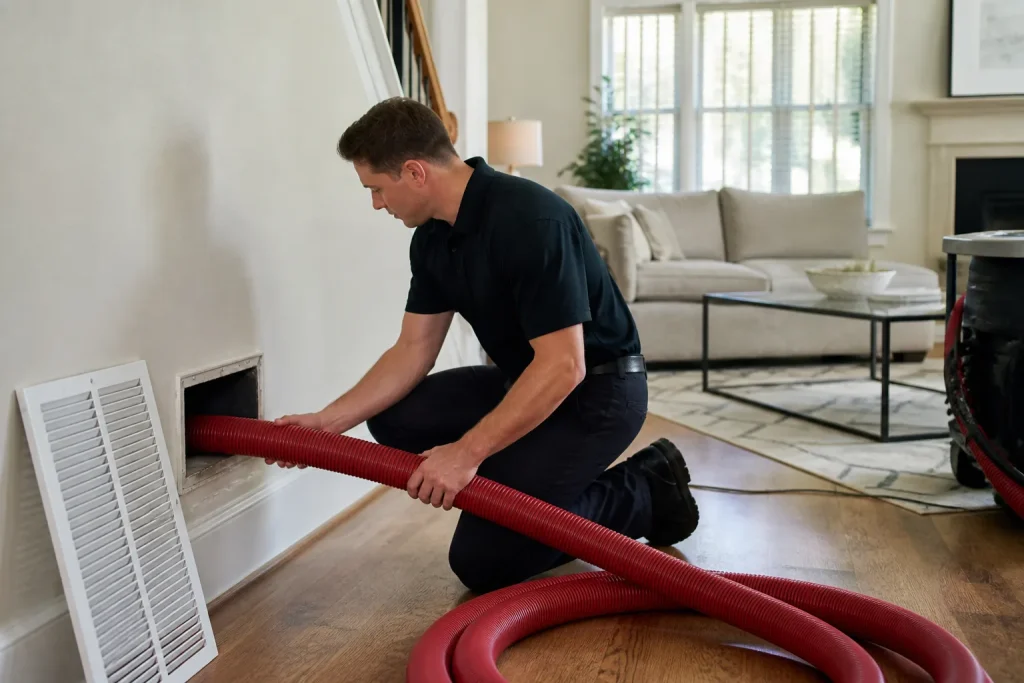
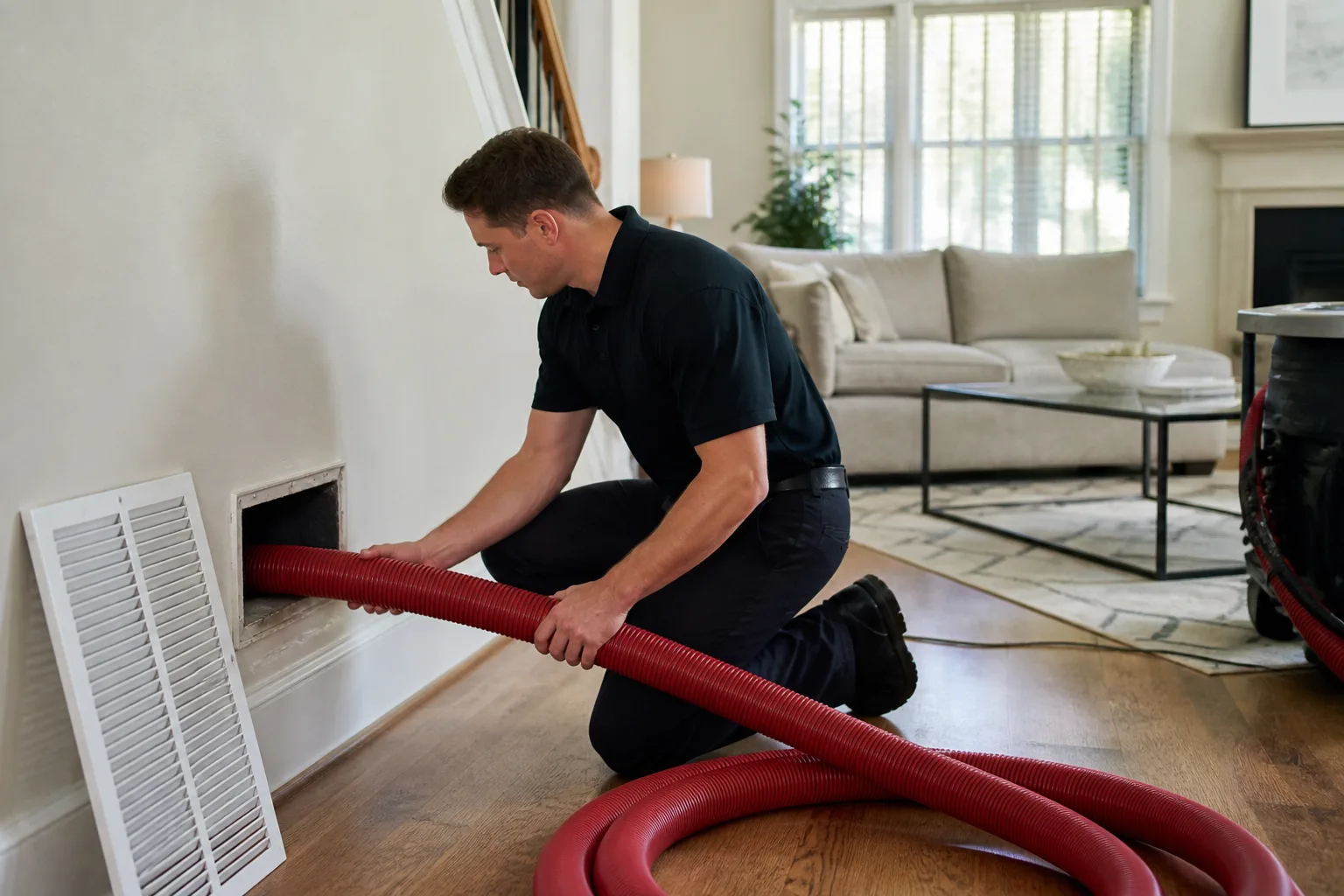
- Clean using contact cleaning and negative-pressure equipment. We use Rotobrush contact-cleaning systems and Nikro negative-pressure equipment, the same grade of tooling used in commercial and restoration work. That’s professional-grade equipment, not a shop-vac and a coupon.
- Repair what the inspection turns up. Loose joints, disconnected runs, damaged sections. We clean it and we fix it, so there’s no second contractor to schedule.
- Re-evaluate the Honeywell equipment in the system against clean, verified airflow. Replace consumables as needed and confirm the equipment is sized and positioned correctly.
The same logic applies to filtration products from Aprilaire and Abatement Technologies, and to Guardsman filtration components. Source removal first, then the equipment. That’s the sequence that makes any of it perform.
What a Technician Should Inspect and Document in a Home With Honeywell Components
A proper inspection in a Columbia home with Honeywell equipment in-line should produce documented findings, not a verbal shrug. Ask for photos. Ask for the inspection write-up. If a company can’t show you what they found, you don’t know what they did.
Here’s what should get checked and documented:
- Equipment placement. Where each Honeywell component sits in the pathway and whether that location still makes sense given the duct layout.
- Filter and cabinet condition. Seal integrity, filter type, and whether bypass is occurring.
- Duct integrity near the equipment. Joints, connections, and any signs of leakage feeding or leaving the equipment.
- Airflow readings. Static pressure and register airflow, so the equipment is being evaluated against real numbers.
- Debris load in the ducts. What’s actually in there and where it’s concentrated.
- Before-and-after photos. Of your ducts, not stock images. This is how you verify the work happened.
We work within the ecosystems of Honeywell and Aprilaire equipment and use Abatement Technologies and Guardsman filtration products, so we’re familiar with the full indoor air quality chain. Not just the ducts in isolation.
When to Call a Pro
Call a professional when you can’t verify the condition of the duct interior yourself, when the system has visible leaks or disconnected runs, or when you’re about to install new air-quality equipment and want to know the ducts can support it. Those are the three moments when a DIY approach stops making sense.
For Columbia homeowners, our Columbia service covers the full pathway. If your dryer vent is part of the picture too, dryer vent cleaning is a standalone service here, not an upsell tacked onto a duct appointment. Your ducts, your dryer vent, your air, fully serviced. One call covers it.
Related services in Columbia: air duct cleaning, air duct repair, and dryer vent cleaning. If you’re not sure which one you need, that’s what the estimate is for.
The Bottom Line
Honeywell makes good air-quality equipment. It doesn’t clean ducts, and it can’t overcome a dirty or leaking system around it. The sequence matters: clean and repair the air pathway first, then evaluate the equipment that lives inside it. Skip that order and you’ll spend money on hardware that never performs.
- Honeywell products (filters, UV purifiers, humidifiers, electronic air cleaners) all depend on clean, sealed ducts.
- Installing new IAQ equipment into dirty ducts compromises it immediately.
- Inspect and document before you buy or replace anything.
- Clean first, evaluate equipment second.
- Ask for before-and-after photos. Every time.
If you’re in Columbia and need help, Hartwell Air Duct Cleaning offers free estimates. Call (866) 942-9804. We answer 24/7, with fast dispatch from 7am to 7pm, Sunday through Friday. Our technicians have up to 11 years of experience, and every job gets one flat price agreed before work starts.
Frequently Asked Questions
No. Honeywell is an equipment manufacturer, not a cleaning service. They make filters, UV purifiers, humidifiers, and electronic air cleaners that mount in or around your ductwork. The cleaning itself is done by a local duct cleaning company. Call (866) 942-9804 for a free estimate on the service side.
Clean and repair your ducts first, then install or evaluate the purifier. Installing air-quality equipment into dirty or leaking ductwork compromises its performance from day one and shortens the life of consumables. Get the pathway clean and verified first, then size the equipment to it. Call (866) 942-9804 for an inspection.
Check four things: filter seating and bypass, UV lamp age, humidifier water panel condition, and electronic cell cleanliness. Then look at the duct condition around each component and the airflow at your registers. If any of those come up short, the equipment may be fine and the system around it may not be. Call (866) 942-9804 and we’ll document what’s actually going on.
There’s no universal schedule. Homes with pets, recent renovation, or visible dust at the registers tend to need it sooner. Homes with well-sealed ducts and clean filtration can go longer. The honest answer is to inspect before you schedule, rather than cleaning on a calendar. Call (866) 942-9804 for a free estimate and a straight read on your system.
Written by the team at Hartwell Air Duct Cleaning.
Need Air Duct Cleaning Help?
Call Hartwell Air Duct Cleaning - licensed & insured, here with fast help in Columbia.
(866) 942-9804