
Last updated November 15, 2026
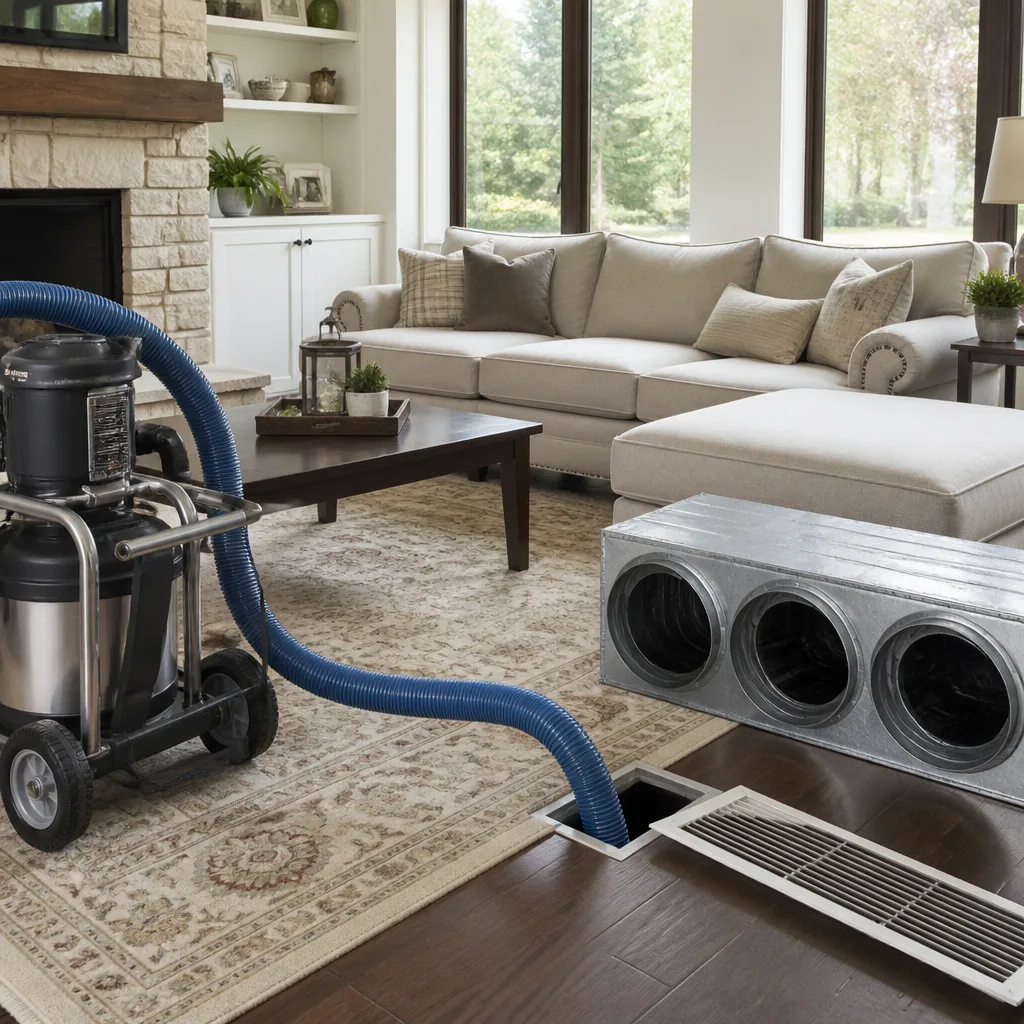 Whole-home duct cleaning
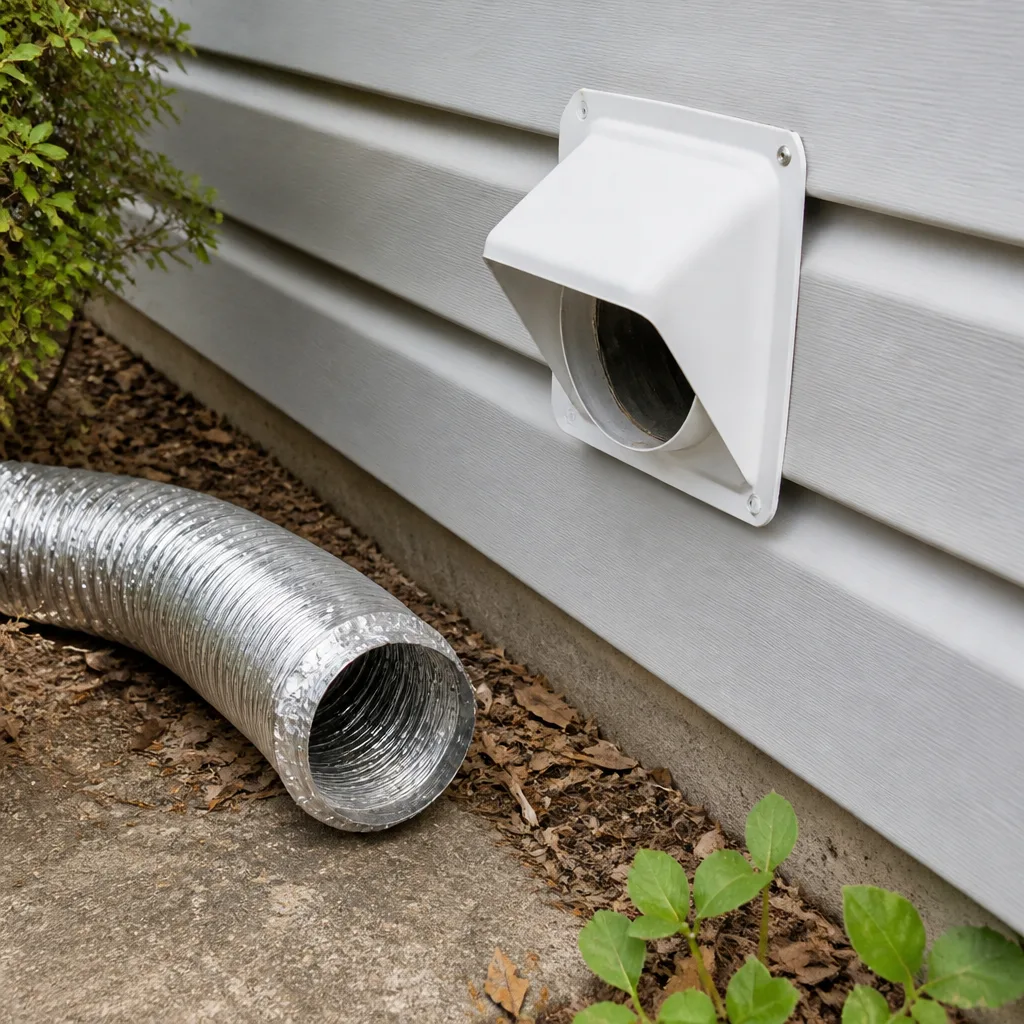 Dryer vent cleaning
 Camera inspection
 Sanitizing & deodorizing
Whole-system duct and dryer vent check with before-and-after photos - you see exactly what came out of your vents
That "$99 whole-house special" is a bait ad - the real number appears once they are in your hallway, or the "clean" is a shop-vac at the register. We photograph the inside of your ducts before and after instead.
Seasonal Air Duct Cleaning Care for Columbia: Year-Round Homeowner’s Guide
Most seasonal duct care calendars are built for a climate that doesn’t exist here. They split the year into four tidy quarters, treat spring and fall as light-duty “off months,” and assume the heating system carries half the load. Columbia doesn’t work that way. Our cooling season runs long and overlaps into the months most guides call downtime, and our heating season arrives compressed into a tight stretch. That mismatch matters because duct maintenance is cumulative: what settles inside the system during a high-runtime month compounds during the next one. In this guide we’ll walk through what each Columbia season actually asks of your ducts, when to schedule cleaning, what post-storm checks look like, and how your HVAC system’s own behavior tells you when something is off. The goal is a schedule that matches Columbia weather instead of a national template.
Quick Answer
For Columbia homes, the best time to clean air ducts is late February to early March, before the pollen peak and ahead of the long cooling season. The system then runs hardest from April through October, with a mid-summer access check in July to catch what humidity and storm intrusion have deposited. Fall cleaning is less urgent here than the national guides suggest because the shoulder months still carry heavy runtime, and a heating-season startup smell in November is a diagnostic signal, not a reason to wait until spring.
Styles & brands we work with
- Whole-home duct cleaning
- Dryer vent cleaning
- Camera inspection
- Sanitizing & deodorizing
Table of Contents
- Why Columbia’s Seasons Don’t Divide Into Four Equal Quarters
- The Extended Cooling Season: April Through October
- The Compressed Heating Season and What It Reveals
- Why Late February and Early March Is the Optimal Pre-Season Window
- Post-Storm Protocol for Columbia Duct Systems
- Reading Your System’s Post-Season Behavior as a Diagnostic
- The Case for a Mid-Summer Access Check in July
- Your Columbia Seasonal Duct Maintenance Schedule
Why Columbia’s Seasons Don’t Divide Into Four Equal Quarters
Columbia’s HVAC stress pattern is lopsided. The cooling system runs for most of the year, while the heating system operates in a much tighter window. The consequence is that duct contamination accumulates unevenly. Airborne debris drawn into the return side during long cooling months settles in a way the heating side never sees, and by the time heating season arrives, the return runs may already be loaded.
The condition that surprises homeowners most is the shoulder season. In many parts of the country, late spring and early fall mean the system sits idle. In Columbia, May and October routinely log heavy cooling runtime, which means the “off months” most maintenance calendars schedule as free passes are actually high-use periods. Deferred duct work in these windows doesn’t pause. It compounds.
Three factors drive this in Columbia specifically:
- Long cooling runtime. When the air handler runs for months at a time, every cubic foot of return air passes over the same filter, the same coil, and through the same return runs. Contamination builds at the rate the system runs, not on a calendar.
- Pollen load in spring. The region’s spring pollen season is significant, and much of it is drawn into the return side before it settles outdoors. A duct system cleaned in late winter starts the pollen season clean, while one cleaned in fall starts the pollen season loaded.
- Summer humidity and storm intrusion. High summer humidity, combined with periodic tropical weather events, pushes moisture into the system envelope. Moisture plus settled debris is what makes a duct system start to smell musty on startup.
We’ve seen this pattern across Columbia repeatedly. The homes that struggle most with musty startup odors in June and again in October are usually the ones whose maintenance calendar was built for a northern climate. The fix isn’t more cleaning. It’s cleaning at the right time and checking the system when the season turns, not only when something breaks.
The Extended Cooling Season: April Through October
The cooling season here is the dominant one. Through roughly seven months, the air handler is doing most of its annual work, and the return side of the duct system is where contamination collects first. That’s true whether the home is a newer build or an older one, and it’s true in the neighborhoods throughout Columbia where we see the widest mix of duct types.
What builds up during a long cooling season is mostly particulate: dust, pollen that bypasses the filter, and lint. If the return runs have small leaks or poorly sealed joints, the system also draws attic or crawlspace air, which carries a different profile of debris. Over a season, that’s a measurable deposit.
What to watch during cooling season
- Airflow at the supply registers. Compare the strongest and weakest registers. If the weakest have gotten noticeably weaker over a season, restricted return-side flow is one likely cause.
- Dust on freshly cleaned surfaces. A light, consistent film is normal. A quick return of visible dust, especially on horizontal surfaces near return grilles, points to a source downstream of the filter.
- Musty odor at AC startup. This is the classic summer indicator. Odor at startup usually means moisture plus settled debris somewhere in the evaporator or duct run.
- Filter loading rate. If you’re replacing a filter more often than the manufacturer recommends, more particulate is present than the system expects.
In our experience, mid-cooling-season observations are more useful than end-of-season complaints. A homeowner in Columbia who calls us in July with “the AC smells musty” usually has a different (and simpler) situation than one who calls in November with a list of accumulated issues. The earlier report tells us where to look.
What we do during the cooling season
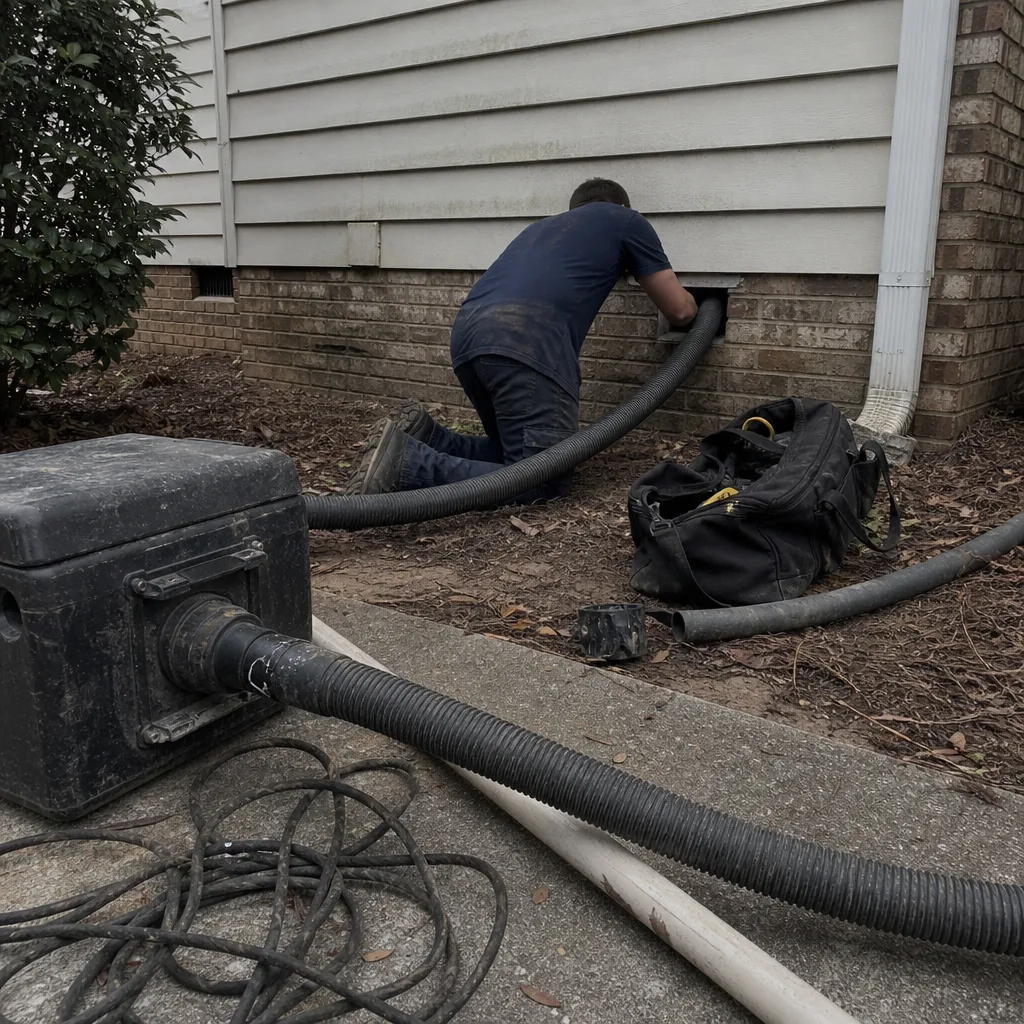
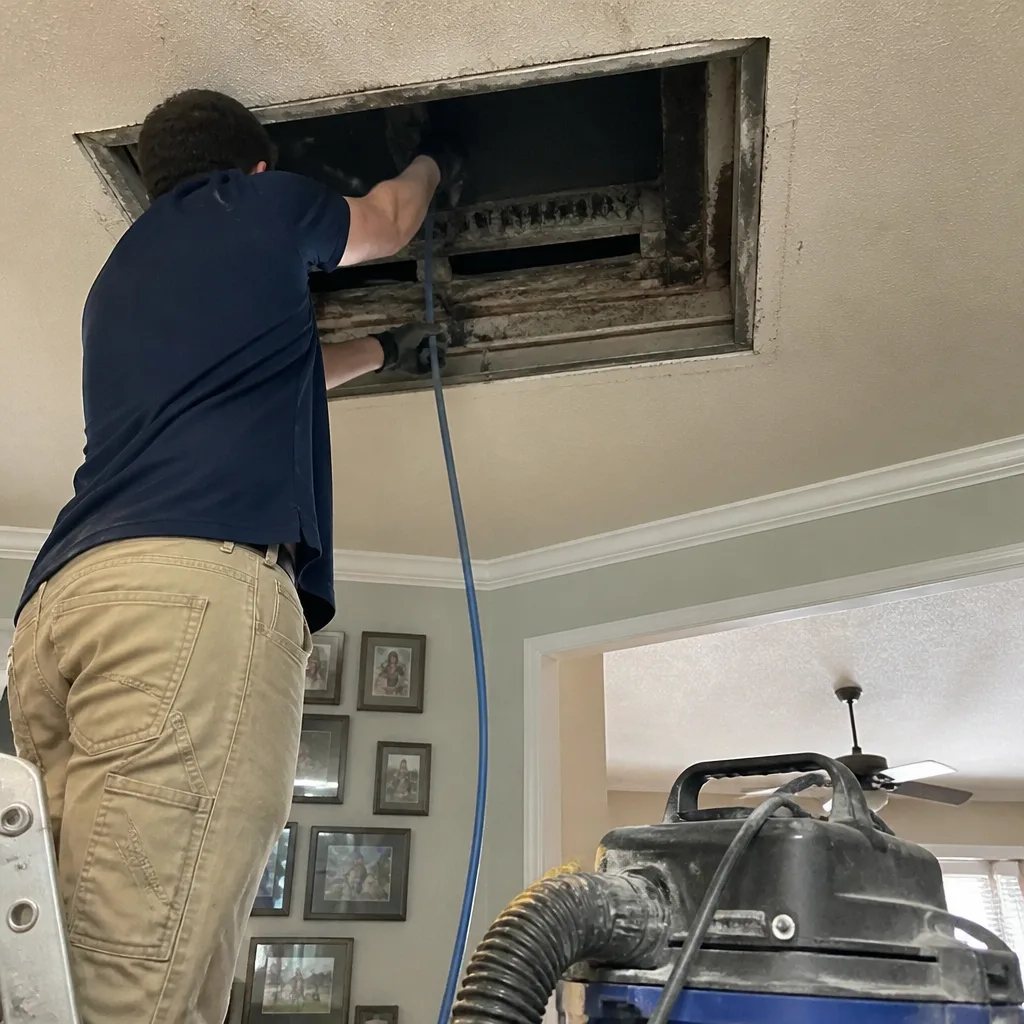
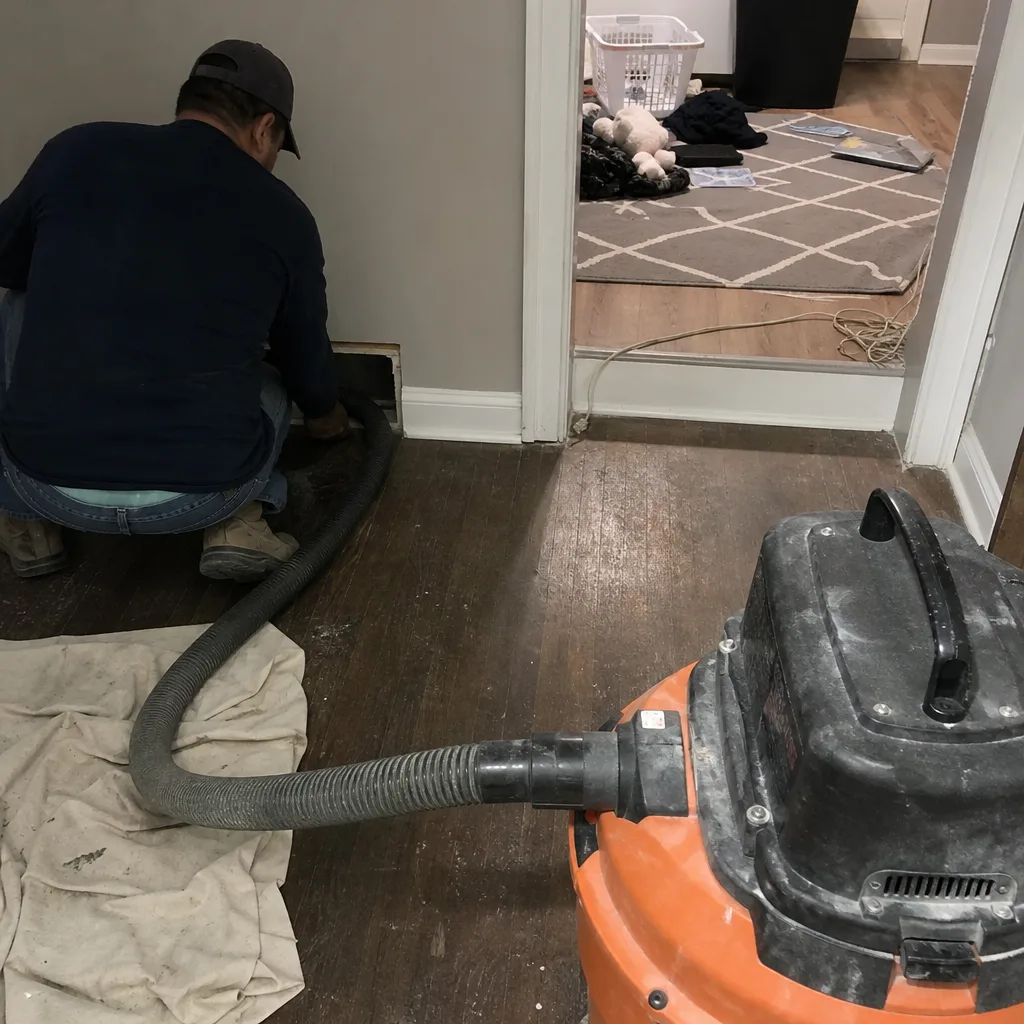
When we clean during the cooling months, the approach is source removal, not surface cleaning. We use Rotobrush contact-cleaning systems to agitate and remove debris from the duct walls, and Nikro negative-pressure equipment to hold the working environment under vacuum so loosened debris doesn’t migrate into the living space. The negative-pressure side is what separates a professional cleaning from a shop-vac job, because a vacuum alone loosens material without capturing it where it started.
The Compressed Heating Season and What It Reveals
Heating season in Columbia occupies a shorter, tighter window than the cooling season. That compression has a useful side effect: the first few weeks of heating operation act like a stress test. A duct system that has been quietly accumulating issues during cooling season often tells you about it the first time the heat comes on.
The two most common signals at heating-season startup are:
- A dusty, “hot” smell at first heat. This is often just dust burning off the heat exchanger, and it usually fades within a day or two. If it persists past the first week, or if it smells stronger than it has in prior years, that’s a signal worth investigating.
- A musty or stale smell. This one doesn’t burn off. It usually points to moisture or settled debris somewhere the heat is now circulating through, and it’s more common in homes whose cooling season was unusually long or whose coil or drain pan had a slow moisture issue.
The heating season also stresses duct integrity in a different way. When the air inside the ducts is warm and the surrounding attic or crawlspace air is cool, small leaks are more visible as a comfort problem. Rooms that ran marginally cool in summer often run noticeably cool in winter, which is often a duct repair signal rather than a furnace signal.
That’s where the repair side of the work matters. air duct cleaning handles what’s inside the system, but if the system is leaking at joints or has crush damage in a run, cleaning the ducts doesn’t fix the comfort problem. We offer duct repair as an in-house service for exactly that reason: cleaning a leaking system leaves the leak in place, and the next cooling season deposits the same material in the same place.
What to check at heating-season startup
- Smell test at each supply register within the first ten minutes of startup. Note whether any register smells different from the others.
- Temperature consistency across rooms. A single cold room that’s been cold for more than one season suggests a duct issue.
- Visible dust around supply registers. Fine black or grey dust at the register frame often means the joint behind it is leaking.
- Return grille condition. Check whether the return grille is visibly loaded or dusty on the inside face.
Why Late February and Early March Is the Optimal Pre-Season Window
If you take one scheduling decision from this guide, make it this one. In Columbia, the best duct cleaning window is late February to early March, ahead of the pollen peak and the start of the long cooling season. Most national maintenance guides recommend fall cleaning. That recommendation was written for a climate where the cooling season starts in June and pollen peaks late. Neither assumption fits Columbia.
The logic is straightforward. Cleaning in late February removes what accumulated during the prior cooling and heating seasons and gives the system a clean starting point for the highest-runtime stretch of the year. Cleaning in October, by contrast, removes what built up during cooling season but leaves the system to run through a long fall and winter before the next cleaning. It also leaves the entire spring pollen load to settle into loosely deposited material.
There’s a second, less obvious reason. Late February is the point in the year when most homeowners first notice that something’s off: a musty smell that started last summer and never fully went away, weaker airflow at one or two registers, or a filter that’s loading faster than it used to. Scheduling a cleaning in that window lets you catch and fix those issues before they compound through another season.
Why fall cleaning still has a place
None of this means fall cleaning is wrong. Homes with heavy summer storm intrusion, significant pollen exposure, or pets can benefit from a fall check-in. But for most Columbia homes, the primary cleaning should land in the late-winter window. Fall is a secondary check, not the main event.
What the late-February visit includes
- Full inspection of return runs, supply trunks, and branch ducts to identify where contamination is concentrated.
- Contact cleaning of duct walls using Rotobrush equipment, matched to the duct material and condition.
- Negative-pressure containment using Nikro equipment so loosened debris is captured, not redistributed.
- Source-removal filtration with Abatement Technologies or Guardsman products where the system profile calls for it.
- Duct repair assessment for any joints, transitions, or runs that show leakage or damage.
- Verification of airflow at supply registers and a report on what was found and what was removed.
Post-Storm Protocol for Columbia Duct Systems
Columbia sees frequent summer thunderstorms and periodic tropical weather systems. Most of these events don’t put water inside a duct system. But some do, and the ones that do are the ones where post-storm assessment matters most. The key distinction is between duct systems that were exposed to high wind and rain but stayed sealed, and those where water found a path in through a compromised roof, an attic vent, or an unsealed return.
After a significant storm, work through the following in order:
- Check for visible water intrusion. Look in the attic, at vents, and around the air handler. Any moisture on duct insulation or at duct joints is a priority issue.
- Smell test the registers. A musty or wet-drywall smell at supply registers within 24 hours of the storm is a signal to stop running the system until it’s assessed.
- Look for debris in return grilles. Storm-driven debris can enter through improperly sealed returns.
- Check filter condition. A filter that loaded rapidly after a storm suggests the storm pushed material into the return side.
- Listen for changes. Any new noise at registers or at the air handler after a storm should be checked before the system runs for another cycle.
Two situations call for professional assessment rather than homeowner inspection:
- Any visible moisture on duct insulation or at duct joints. Wet insulation can support organic growth inside the duct envelope, and surface drying is not enough.
- Any musty odor that starts after a storm and persists more than a couple of days. This usually means material in the system got wet and stayed wet.
We handle post-storm assessments as part of the standard air duct cleaning visit. If duct repair is needed because a storm event damaged a run or a joint, we can address it in the same visit rather than sending you to a second contractor. That’s the “one call covers it” point. Cleaning plus repair on the same visit is the only way to get a post-storm system fully back to normal without a gap.
Reading Your System’s Post-Season Behavior as a Diagnostic
Your HVAC system produces specific signals when a season turns. Those signals are worth paying attention to because they tend to be consistent between years for the same home. A change from one year’s startup to the next is more informative than any single startup smell.
| Signal | Season | What it usually indicates |
|---|---|---|
| Musty odor at AC startup | Late spring / early summer | Moisture plus settled debris in the evaporator or duct run |
| Dusty burn-off smell at first heat | Late fall / early winter | Normal dust on the heat exchanger; concern if it persists past a week |
| Weaker airflow at a single register | Any season | Restricted branch duct, disconnected run, or closed damper |
| Rapid return of visible dust | Summer | Source downstream of filter; possible return-side leak |
| Musty odor at one register only | Any season | Localized moisture or debris in a branch duct |
| Strong smell in a single room | Heating | Duct leak drawing attic or crawlspace air |
The clean way to use this table is to compare one year’s signal to the next. A burn-off smell that fades in two days is not a problem. A burn-off smell that this year hangs on for a week, or gets worse than last year’s, is a reason to look inside the system.
The reason musty AC startup matters so much in Columbia is that our cooling season runs long. A musty smell that appears in May and stays faint through the summer often becomes a full smell by the following spring. Catching it in the current season is what keeps the cleaning cycle from turning into a repair cycle. We’ve seen this pattern repeatedly, and the earlier the assessment, the simpler the work.
The Case for a Mid-Summer Access Check in July
Most homeowners think of duct service as a fall or spring project. We’d argue for July. Humidity peaks in mid-summer in Columbia, and that’s the point where what the cooling season has deposited is at its most problematic. Waiting until fall to look inside the system means spending the worst of the cooling season operating a system that’s already loaded.
The mid-summer access check is a lighter visit than a full cleaning. The goal is diagnostic: confirm what the cooling season has deposited in the return runs, check for moisture issues in the coil and drain pan area, and note whether airflow has degraded since spring. Some homes need nothing more than that. Others discover a return-side leak, a disconnected branch run, or the early stages of moisture-related growth that would be much more expensive to address after another season of running.
What a mid-summer check covers
- Visual inspection of return runs and access points.
- Coil and drain pan area assessment for moisture and debris.
- Airflow comparison against the spring baseline.
- Filter loading review.
- Duct joint integrity spot-check at accessible points.
- Recommendations for whether a cleaning is needed now or can wait for the pre-season window.
There’s a second reason July works well. The mid-summer check is a useful moment to assess integration with the air-quality side of the system. If the home runs a Honeywell or Aprilaire air quality setup, July is the moment to check that filters, humidistats, and any inline filtration components are doing their job. Ducts and air quality equipment work together, and a check in the middle of the heaviest-runtime month is when the interaction is easiest to assess. We work within those systems because cleaning the ducts and checking the air quality components separately, in two visits, is a worse use of everyone’s time.
Your Columbia Seasonal Duct Maintenance Schedule
Here’s a compressed annual schedule built for Columbia’s actual climate pattern. It reflects the long cooling season, the compressed heating season, and the storm window in mid-to-late summer. It’s the schedule we’d recommend for most homes in the area, subject to adjustments for pets, smoking, recent renovation, or known duct damage.
- Late February / early March. Primary duct cleaning visit. Before pollen peak, before the long cooling season. Full inspection, contact cleaning, negative-pressure containment, and any duct repair identified in the inspection.
- Late April. Filter check and register airflow review. Compare to late-winter baseline.
- July. Mid-summer access check. Focus on return-side deposits, coil and drain pan condition, and any moisture signal from storm intrusion.
- Post-storm (any time). Assessment after a significant summer storm or tropical system that passes over Columbia. Visible moisture, musty odor, or rapid filter loading after the storm is the trigger.
- Late October / early November. Heating-season startup check. Note any unusual smell at first heat. Address persistent smells with a duct inspection before the compressed heating season is over.
- December / January. Optional secondary duct check for homes with heavy pollen exposure, pets, or recent storm intrusion. Otherwise review and wait for February.
The single most important change from a national schedule is the shift from fall cleaning to late-winter cleaning. That’s the recommendation that reflects Columbia weather instead of a template. The mid-summer access check and the post-storm sequence are the two others that consistently make the biggest difference in homes we work with in Columbia.
Common Mistakes to Avoid
- Following a fall-cleaning calendar. If your previous duct work was booked for October and you live in Columbia, you’ve been cleaning into the wrong end of the cooling season. Late February through early March is the right window.
- Waiting for a smell to get strong before acting. A faint musty smell at AC startup in May becomes a much more involved cleaning by the following spring. Catching it in the same season is the point.
- Skipping the post-storm check on a home that never showed obvious signs. Storm-introduced moisture doesn’t always make itself known right away. A short inspection after a significant storm is cheap insurance against a much larger issue.
- Cleaning a leaking system without repairing it. Cleaning a duct system with a leak in the return run leaves the leak in place. The next cooling season deposits the same material in the same location. Cleaning and repair need to happen together.
- Treating a single-register smell as a duct-cleaning job. A strong smell at one register in winter is often a duct leak pulling in attic or crawlspace air, not a cleaning issue. The fix is duct repair, not more vacuuming.
- Assuming a mid-summer check is unnecessary because the cleaning happened in February. February cleaning resets the system. The July check confirms what the cooling season has done to it since, and catches moisture issues before they become organic growth.
- Relying on a standard shop-vac-style cleaning when the system needs source removal. A vacuum alone loosens material without capturing it where it started. Rotobrush and Nikro equipment exist for the reason that professional capture is the only way to actually remove debris from the duct wall rather than redistribute it.
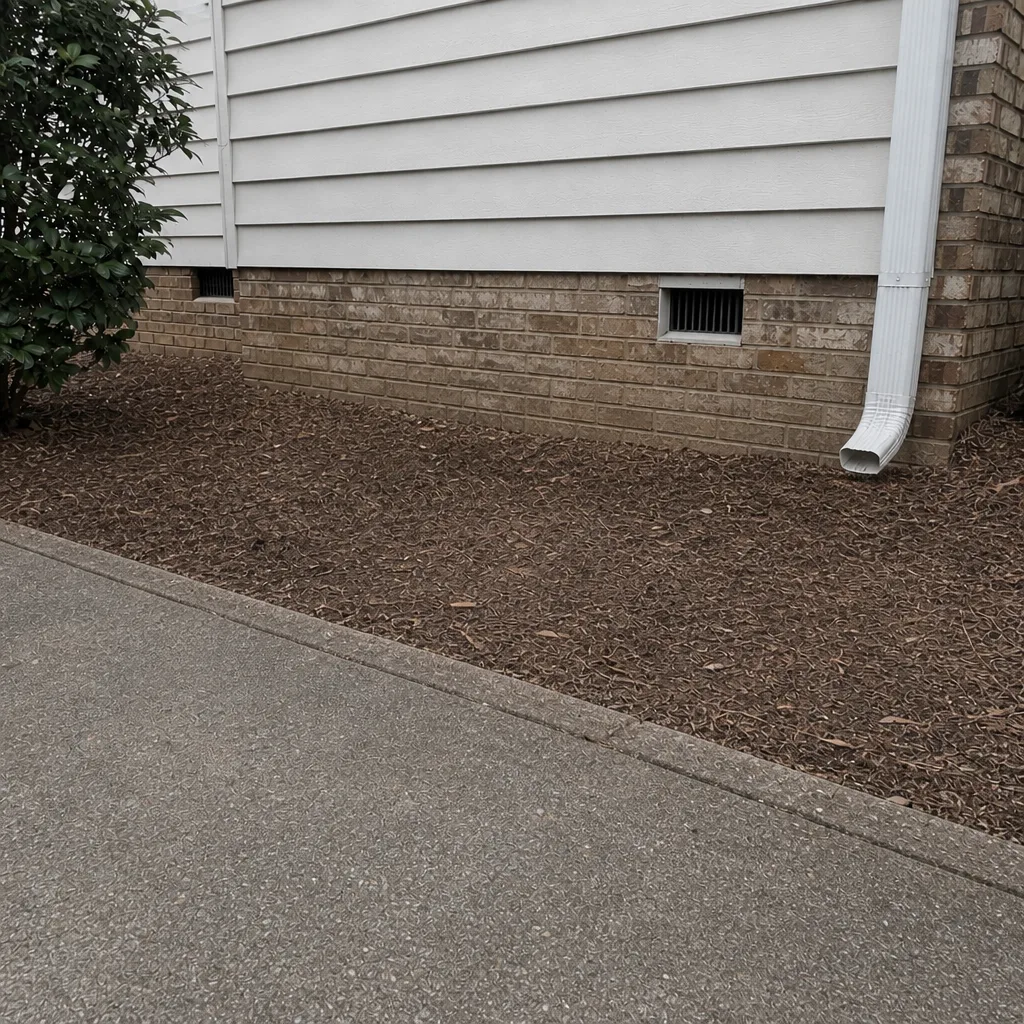
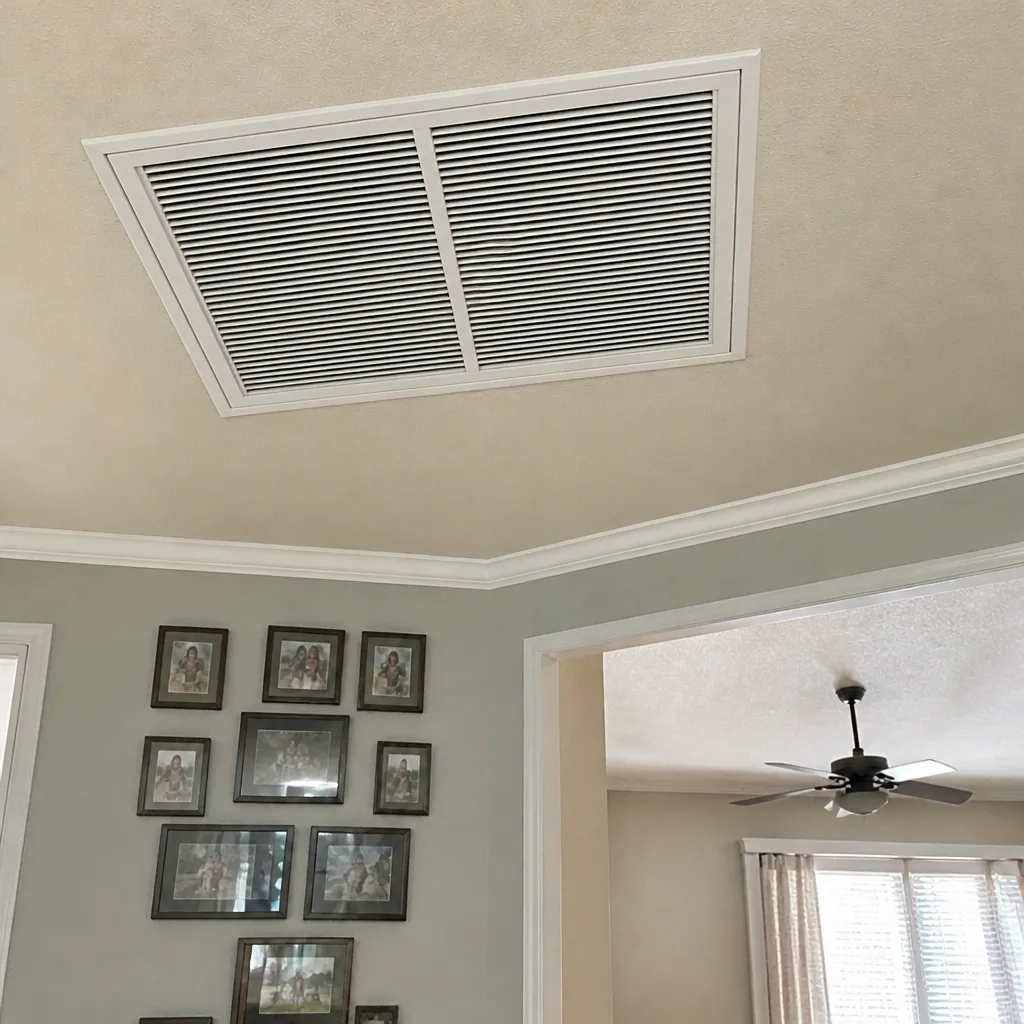
See the difference
 Before
 After
 Before
 After
 Before
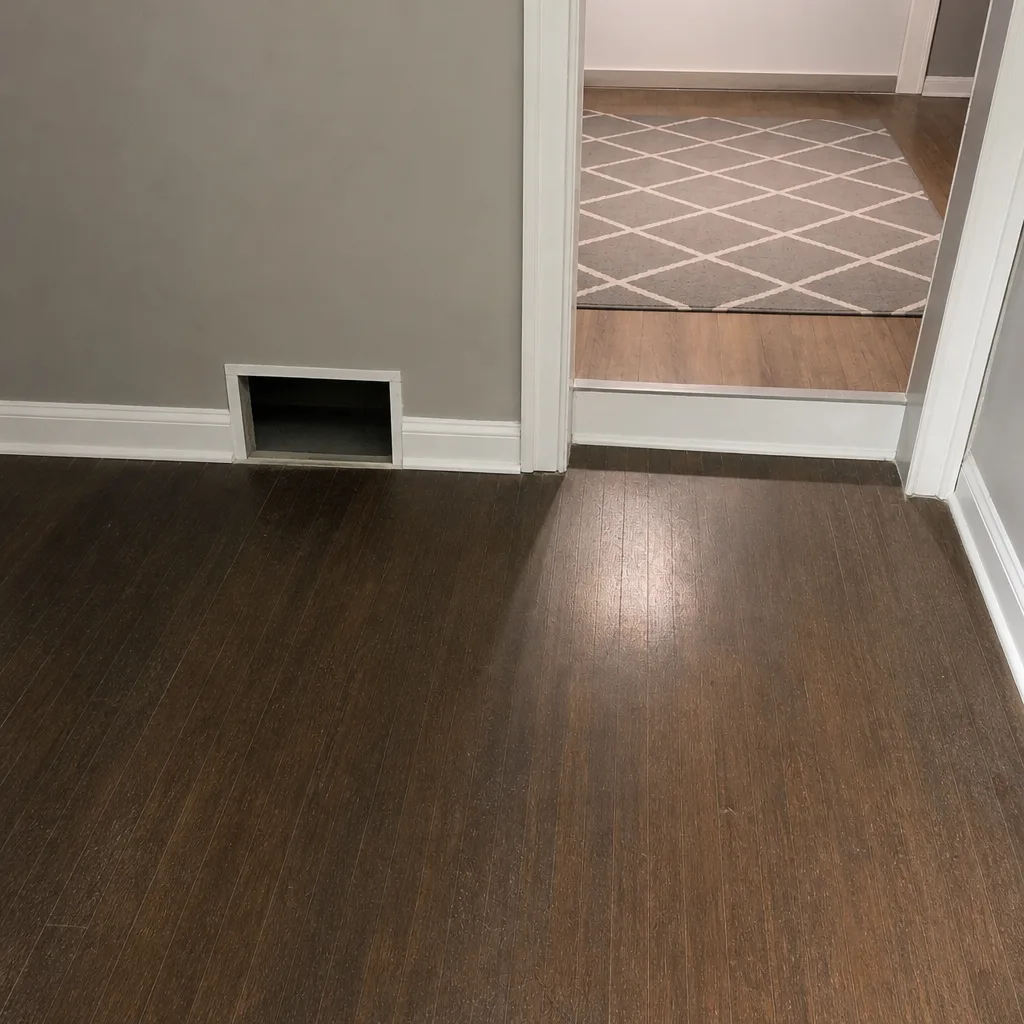 After
When to Call a Professional
Some duct issues are homeowner checks. Others are not. Call a professional when you find visible moisture on duct insulation or at a duct joint after a storm, when a musty or stale smell at a register persists more than a week, when airflow at a single register has dropped noticeably and doesn’t recover after a filter change, or when a heating-season startup smell gets worse year over year rather than fading on its own. Call as well if you can see visible damage to an accessible duct run, a disconnected branch, or crush damage in a crawlspace or attic. Homes in Columbia with a duct system more than a decade old and no prior cleaning history should get a professional assessment before assuming the schedule above fits their situation. Hartwell Air Duct Cleaning offers free estimates in Columbia. Our technicians have up to 11 years of experience with Rotobrush contact cleaning, Nikro negative pressure work, and duct repair as an in-house service. Call (866) 942-9804 for a free estimate.
Frequently Asked Questions
Late February to early March is the best window for most Columbia homes. That timing removes the prior season’s accumulation before the spring pollen peak and before the long cooling season begins, so the system starts the highest-runtime stretch of the year clean. Fall cleaning has a place for homes with significant storm intrusion or heavy pollen exposure, but the primary cleaning should land in late winter for most homes in Columbia.
Most homes don’t need two full cleanings a year. What works better in Columbia is one full cleaning in late winter plus a lighter mid-summer access check in July, and a post-storm inspection after any significant summer weather event. That combination catches what the long cooling season does without doubling the cost. Homes with pets, recent renovation, or duct damage may warrant a different rhythm, which is why a free estimate is worth the call. Call (866) 942-9804 for a free estimate.
A musty smell at AC startup usually means moisture plus settled debris somewhere in the evaporator area or a return run, not necessarily a duct cleaning issue. If the cleaning was done in late winter and the smell appears in spring or summer, the likely causes are coil moisture, a drain pan issue, or a return-side leak drawn in attic or crawlspace air. A diagnostic visit is the fastest way to identify which. Call (866) 942-9804 for a free estimate.
Check for visible water intrusion first: attic, vents, and around the air handler. Smell-test the supply registers within 24 hours. If either check turns up something, stop running the system until it’s assessed. If a musty odor persists more than a couple of days or you can see moisture on duct insulation, call for a professional assessment. We can handle cleaning and any needed duct repair on the same visit. Call (866) 942-9804 for a free estimate.
Duct repair is a separate service from cleaning, but we do both in-house and can typically handle them on the same visit. That matters because cleaning a leaking or damaged system without repairing it leaves the underlying problem in place, and the same debris returns the next season. If a post-storm or heating-season inspection turns up a leak, a disconnected run, or crush damage, we can address it in the same visit rather than sending you to a second contractor. Call (866) 942-9804 for a free estimate.
In our experience working throughout Columbia, the most common issues in older homes are return-side leaks drawing attic or crawlspace air, joint separation at the air handler or main trunk transitions, and degraded insulation on runs in unconditioned attic space. The combination of long cooling seasons and summer humidity is what makes each of these more visible here than in drier climates. A full inspection during a cleaning visit is the best way to catch them. Call (866) 942-9804 for a free estimate.
The Bottom Line
Columbia’s seasons don’t divide neatly into four equal quarters, and a duct maintenance schedule built for a northern climate will always leave homeowners a step behind. The two changes that matter most: clean in late February through early March, before pollen and the long cooling season, and add a mid-summer access check in July rather than waiting for fall to find out what the cooling season deposited. Build in a post-storm check after significant summer weather, use heating-season startup smells as a diagnostic rather than a reason to wait, and treat duct repair as part of cleaning rather than a separate event. That’s the schedule that reflects how Columbia’s climate actually treats a duct system.
If your ducts are dirty, leaking, or damaged, we can clean and repair them in the same visit. Professional-grade equipment from Rotobrush and Nikro, familiarity with Honeywell and Aprilaire air-quality systems, and abatement-grade filtration from Abatement Technologies and Guardsman make a single call enough to cover the full indoor air pathway from supply to exhaust. Hartwell Air Duct Cleaning offers free estimates. Call (866) 942-9804. We answer 24/7. Fast dispatch from 7am to 7pm, Sunday through Friday. You can also read more about our dryer vent cleaning service for the exhaust side of the same indoor air pathway.
Written by the team at Hartwell Air Duct Cleaning.