
Last updated November 15, 2026
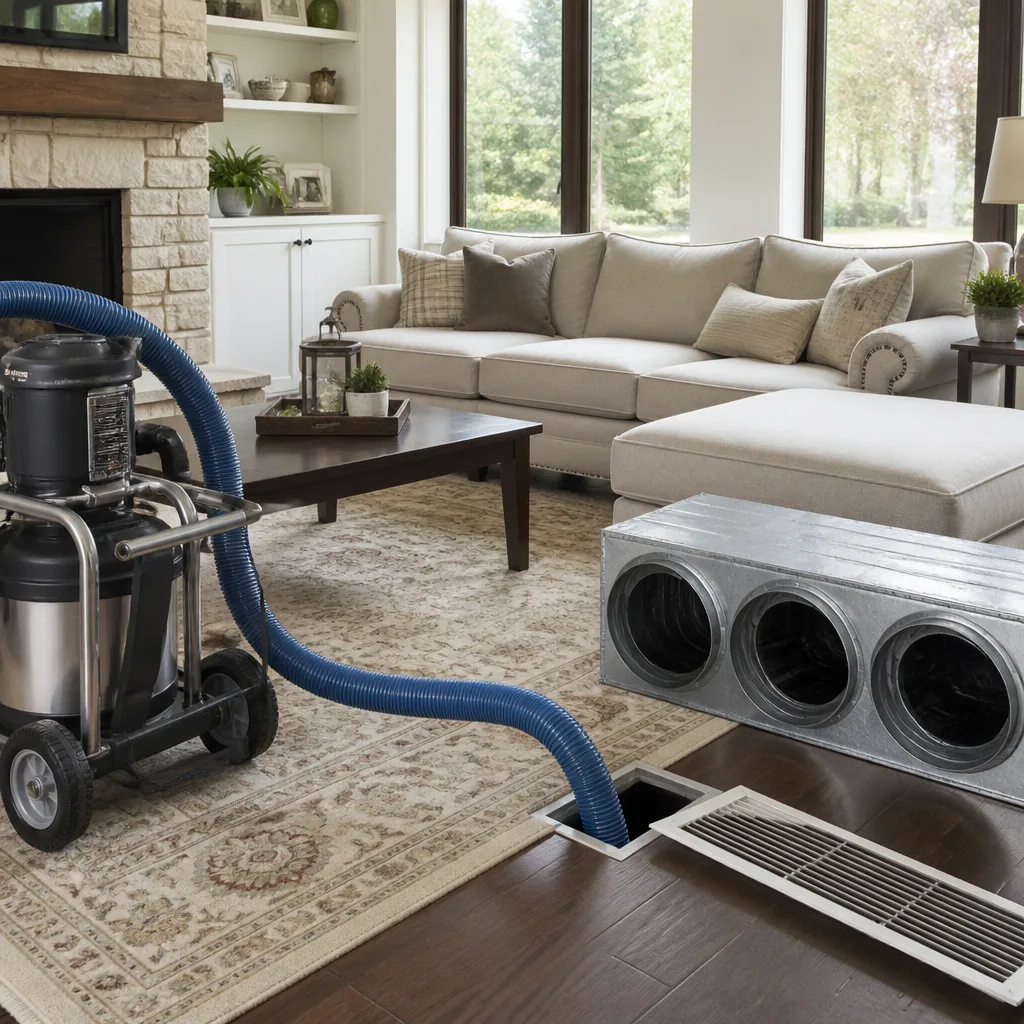 Whole-home duct cleaning
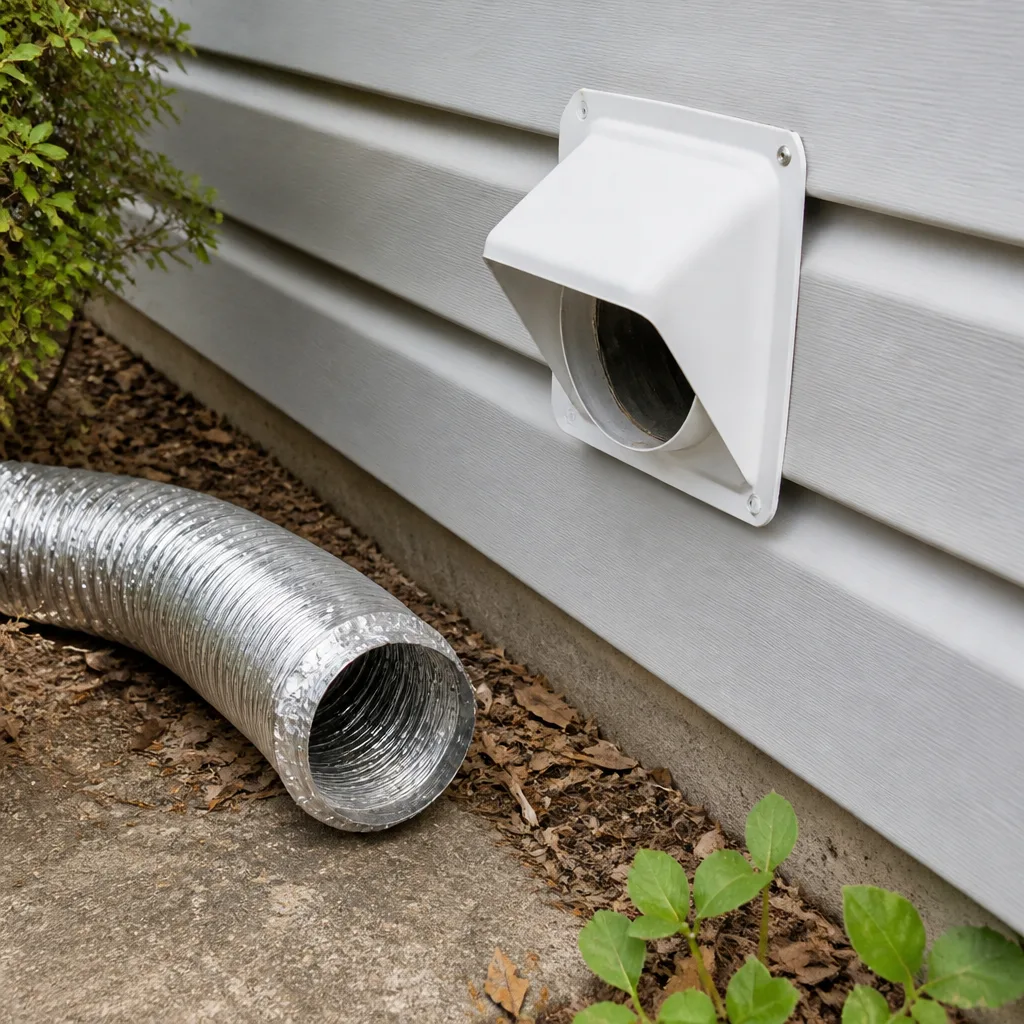 Dryer vent cleaning
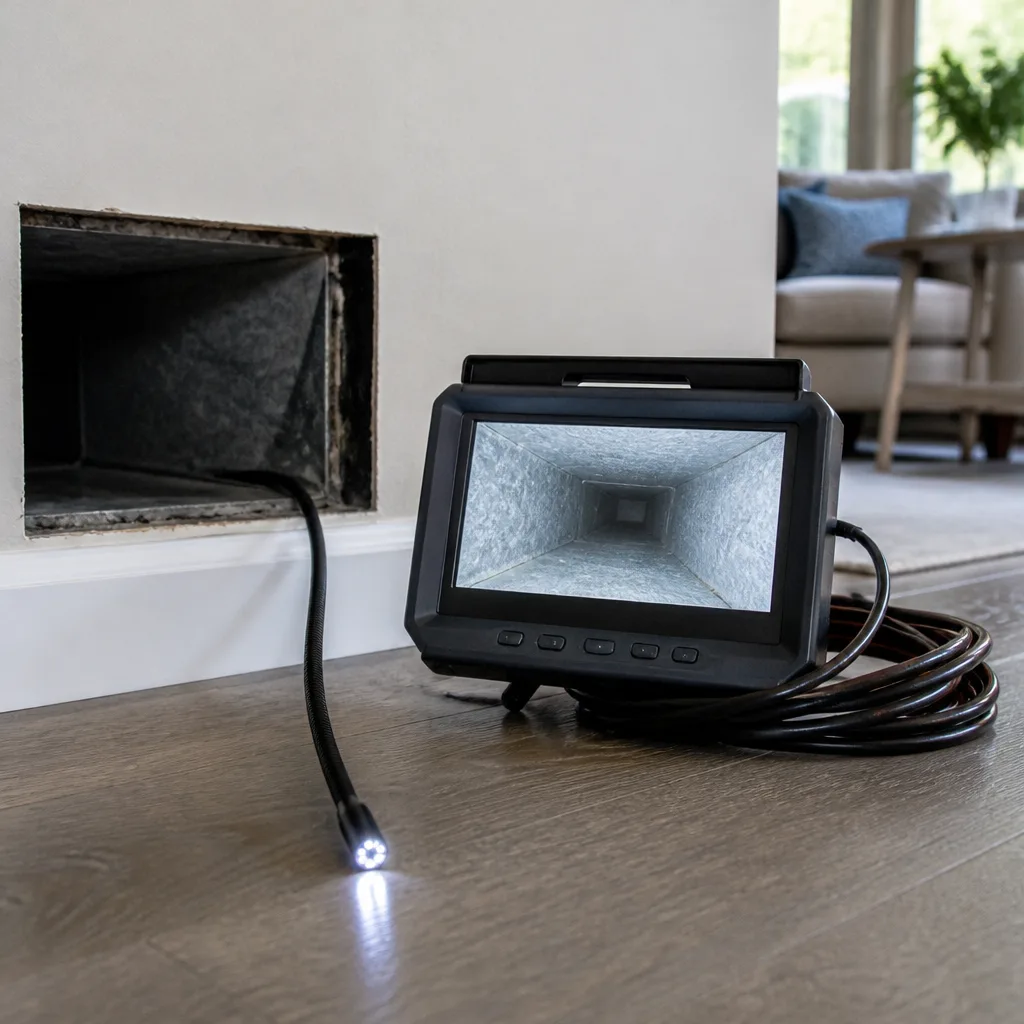 Camera inspection
 Sanitizing & deodorizing
Whole-system duct and dryer vent check with before-and-after photos - you see exactly what came out of your vents
That "$99 whole-house special" is a bait ad - the real number appears once they are in your hallway, or the "clean" is a shop-vac at the register. We photograph the inside of your ducts before and after instead.
Air Duct Cleaning Maintenance Schedule: What to Do and When
The standard advice says every three to five years. That number was written for a generic American house, not for a 1980s brick ranch in Irmo with a crawlspace, two dogs, and the nine months of pine pollen that settle over Columbia every spring. Homes here don’t collect dust at the national average, and a calendar-based schedule quietly ignores that. What follows is a conditional schedule: the local variables that actually speed up contamination, a decision framework for your household, and the between-cleaning checks that keep a clean system clean. You’ll leave knowing how to set your own interval instead of borrowing someone else’s.
Quick Answer
Most Columbia homes need professional air duct cleaning every two to four years, not the generic three-to-five. Homes with pets, smokers, allergy sufferers, or a recent renovation typically land at the shorter end, and crawlspace construction plus high Lowcountry humidity can push it shorter still. A recent professional clean with interior photos gives you the baseline to know when yours is actually due.
Styles & brands we work with
- Whole-home duct cleaning
- Dryer vent cleaning
- Camera inspection
- Sanitizing & deodorizing
Table of Contents
- Why the Generic Three-to-Five Year Rule Doesn’t Fit Columbia
- The Columbia-Specific Variables That Speed Up Contamination
- A Decision Framework for Your Household’s Real Interval
- What to Do Between Professional Cleanings
- Post-Cleaning Baseline: Why You Should Photograph Your Ducts
- Red-Flag Events That Reset the Maintenance Clock
- What a Professional Cleaning Actually Involves
- How the Schedule Shifts Across Columbia’s Housing Stock
Why the Generic Three-to-Five Year Rule Doesn’t Fit Columbia
The three-to-five year recommendation floats around the internet as if every house sat in the same climate. It doesn’t account for what’s in the air, how the house was built, or who lives there. Columbia sits in a humid subtropical zone with a long pollen season, a strong pine presence, and a housing stock that includes a lot of older slab and crawlspace construction. Those aren’t small details; they change how fast a duct system collects dust, pollen, and biological growth.
In our experience across Columbia, the homes that hit the shorter end of the interval aren’t the ones that look dirty on the outside. They’re the ones where the return plenum runs through a humid crawlspace, or where the filter housing has a loose seal, or where the household has two indoor pets and a smoker. Any one of those can pull a “four-year” home down to two.
There’s also a perception problem: most homeowners judge their ducts by the supply grilles they can see. Those grilles stay relatively clean because air is blowing out of them. The contamination sits in the return side, in the main trunk, and in the boots behind the drywall. A schedule built on visible grille dust is a schedule built on the wrong signal.
Here’s what to hold onto: your interval should be calculated, not copied. The rest of this guide gives you the calculation.
The Columbia-Specific Variables That Speed Up Contamination
Air duct contamination isn’t evenly distributed across the country. In Columbia, five local factors show up repeatedly in the systems we see.
1. Humidity and biological growth
Columbia’s long, humid summers mean the air inside a duct system is often above the moisture level that supports mold and mildew. When the AC runs, the coil and duct interior stay damp for part of the day, especially on the return side. That’s a growth-friendly environment. Homes that run the fan continuously, or that have oversized systems short-cycling, tend to grow more.
In humid Columbia, a duct system that never fully dries becomes a biological surface, not just a dusty one. That alone justifies shortening the interval.
2. Pine pollen load
Pine pollen coats cars, porches, and window screens across the Midlands every spring. It gets into the return air, and much of it ends up on the inside of the duct walls. Pollen is sticky and fine, so a standard filter catches some but not all. Homes near pine-heavy neighborhoods in Lexington and Irmo often show visible pollen staining in the return trunk within a couple of seasons.
3. Crawlspace and slab construction
Older Columbia homes frequently run ducts through unconditioned crawlspaces, where the air can be humid, musty, and prone to rodent activity. Slab homes with ducts buried under the slab are a different problem: they tend to hold onto moisture and are harder to inspect. In both cases, the ducts are exposed to conditions a basement or a sealed attic wouldn’t create.
4. Pets and occupants
Two dogs or three cats will roughly double the dust load in a home. Smokers add residue that clings to duct walls. Allergy and asthma sufferers notice the difference sooner. Any of these shortens the interval.
5. Renovation dust
Any renovation that opens walls or disturbs drywall sends fine gypsum and wood dust into the return system. If the HVAC ran during the work, the ducts took the hit. A post-renovation cleaning is often the single most important cleaning a Columbia home ever gets.
A Decision Framework for Your Household’s Real Interval
Work through these questions in order. Each answer either keeps your interval where it is or shortens it. This is the framework we walk Columbia homeowners through, and it beats a calendar every time.
Step 1: Start with the base interval
Begin with three to four years for a typical Columbia home with no special factors. That’s your starting point, not your final answer.
Step 2: Add pets
If you have one or more indoor pets, subtract one year. Two or more large, double-coated dogs: subtract two.
Step 3: Add smokers
If anyone smokes indoors, subtract one to two years. Smoke residue coats duct walls and doesn’t come off in a normal cleaning.
Step 4: Add allergy or asthma sufferers
If someone in the home has allergies or asthma, subtract one year. The goal shifts from “keep it reasonable” to “keep it clean enough to matter.”
Step 5: Add a recent renovation
If you’ve remodeled in the past 12 months, do a cleaning now regardless of your calculated interval. Renovation dust is a one-time reset.
Step 6: Add crawlspace or slab construction
If your ducts run through a humid crawlspace or under a slab, subtract one year. In Columbia, this is common enough that it should be a routine question.
Step 7: Add a visual check
Pull a supply grille and a return grille with a flashlight. If you see significant dust buildup, visible biological growth, or debris, don’t wait for your calculated date.
Numbered summary
- Base: 3-4 years
- Pets: -1 to -2 years
- Smokers: -1 to -2 years
- Allergies/asthma: -1 year
- Recent renovation: clean now
- Crawlspace or slab ducts: -1 year
- Visual check: overrides the math
What to Do Between Professional Cleanings
A cleaning buys you a clean system and a baseline. What happens over the following months decides whether you get the full value. These four habits are the ones that keep a Columbia home’s ducts clean longer.
Filter grade and replacement cadence
Use a filter with a MERV rating appropriate to your system, typically MERV 8 to MERV 11 for a residential setup. Higher is not always better; a filter that’s too restrictive can stress the blower. Change it on a schedule: every one to three months in Columbia’s pollen and dust seasons, longer for low-occupancy homes. A dirty filter is the single biggest cause of premature duct contamination.
Grille inspection
Every few months, pull a handful of grilles and look inside with a flashlight. You’re checking for dust accumulation on the boot, debris, pest activity, or moisture. Take a photo. Compare it to the previous check. This is how you spot a problem before it becomes a cleaning.
Condensate line checks
The condensate drain carries moisture out of the system. If it clogs, water backs up and can wet the air handler and nearby ductwork. In a humid Columbia summer, a clogged line is common. Check the drain pan and the line every month during cooling season.
Return air path
Make sure furniture, rugs, and boxes aren’t blocking return grilles. A blocked return increases the pressure differential across the system, pulls dust in around leaky joints, and shortens the effective life of your clean.
Post-Cleaning Baseline: Why You Should Photograph Your Ducts
Here’s a habit almost no homeowner has, and it’s the one that pays off most at decision time. When a professional cleans your ducts, ask them to photograph the interior before and after. Then keep those photos in a folder you’ll actually find again.
Why does it matter? Because six months later, when someone in the house is sneezing, or you notice dust on the furniture again, you’ll have a comparison point. You can look at the photos from the day of the clean, take a fresh flashlight photo of the same section, and see whether the duct has actually gotten dirty or whether the issue is somewhere else entirely.
Without a baseline, every homeowner guesses. Guessing is how people end up cleaning too early (wasting money) or too late (breathing a system that’s been compromised for a year). Documentation converts a vague schedule into an evidence-based one. Ask for the photos before the crew packs up.
At Hartwell Air Duct Cleaning, before-and-after photos are part of the job. It’s how we demonstrate source removal, and it’s how you get the baseline. If a company resists showing you interior photos of your own ducts, that’s a signal.
Red-Flag Events That Reset the Maintenance Clock
Some events override your calculated interval entirely. When any of these happen, schedule a cleaning regardless of how recently you had one.
- Flood or water intrusion. Water in a duct system is a serious problem. If your home took on water from a storm or plumbing failure, the ducts may need inspection and cleaning even if they were cleaned recently. Mold growth can begin within days.
- HVAC replacement or major repair. A new air handler or a significant HVAC change often ends up circulating construction debris and loose material through the ducts. Cleaning as part of the commissioning process is normal.
- Rodent activity. If you’ve had rodents in the attic or crawlspace, assume the ducts are affected. Rodent droppings, nesting material, and chewed insulation are a health concern and a duct-integrity concern. This one needs a professional, and it needs one soon.
- Fire or smoke damage. Even a small fire can push soot into the return system. Duct cleaning is part of the restoration process.
- Pest treatment or chemical use. Some treatments leave residue that can migrate into the duct system. Follow the pest control company’s guidance.
- Renovation dust. Covered above, but worth repeating: any remodeling that opened walls or ceilings resets the clock.
If any of these have happened, don’t wait for your interval. The cleaning still needs to be done by a professional using the right equipment; a shop-vac won’t cut it for rodent contamination or post-flood work.
What a Professional Cleaning Actually Involves
Knowing what a real cleaning looks like changes how you choose one, and it changes how you evaluate a quote. The difference between a professional job and a cheap one isn’t small.
Equipment matters
A professional cleaning uses contact cleaning and negative pressure. That means the dirt is agitated off the duct walls with a rotating brush or air whip, and the duct is held under negative pressure so loosened material is captured, not blown into the room. At Hartwell, we use Rotobrush contact-cleaning systems and Nikro negative-pressure equipment, the same class of tools used in commercial and restoration applications, not a shop-vac and a coupon.
Source removal, not surface cleaning
The goal is to remove the contamination from the source: the duct walls, the boots, the return plenum, and the air handler surfaces where accessible. Abatement Technologies and Guardsman filtration products support that approach when source removal is the objective. Cleaning a grille and calling it done isn’t the same job.
Inspection and documentation
A proper cleaning includes a look at the duct system before and after. It also includes a check for duct integrity: leaks, disconnected runs, crushed flex duct, and other issues that a cleaning alone won’t fix.
Repair, when it’s needed
Here’s where most companies stop. They clean, they leave, and if your ducts were leaking or disconnected, you’re breathing air from your crawlspace. After the cleaning, ask whether the ducts are actually sealed and connected. If not, duct repair is the next step, and it’s the reason we offer cleaning and repair as a single call. You shouldn’t have to coordinate a second contractor to finish the job.
How the Schedule Shifts Across Columbia’s Housing Stock
Columbia’s neighborhoods are not all built the same, and the construction type changes the schedule. Here’s how the interval shifts in practice.
- Older brick ranches in Irmo and similar suburbs. Crawlspace construction, often with flex duct that’s been in place for decades. Humidity and rodent exposure are common. These homes tend to land at the shorter end of the range.
- Downtown and Shandon-area older homes. Slab and pier-and-beam construction, smaller duct systems, and more likelihood of previous renovations. Renovation-driven cleanings are more frequent here.
- Lexington and suburban new construction. Tighter homes, less crawlspace exposure, but often more filter maintenance needed because the systems are sealed tighter. The interval tends to be longer, but the between-cleaning habits matter more.
- Furnace Creek and other wooded neighborhoods. Higher pine pollen exposure during spring. Homes that back up to trees should be at the shorter end of the range for pollen reasons alone.
Wherever you are in the Columbia area, the framework is the same: base it on the house, the occupants, and the local factors, not on a national average.
Common Mistakes to Avoid
- Following the generic three-to-five year rule without adjustment. It ignores climate, housing stock, and occupants. In Columbia, that can leave you breathing a system that should have been cleaned two years ago.
- Judging duct cleanliness by the grilles. Supply grilles look clean because air is blowing out of them. The contamination sits on the return side and in the trunk, where you don’t see it.
- Using a shop-vac or consumer vacuum. It loosens dust without capturing it under negative pressure, which can make the air worse. Professional equipment exists for a reason.
- Skipping the filter. A clogged filter is the fastest route back to a dirty system. Change it on the pollen-season schedule, not just when you remember.
- Cleaning but not repairing. If the ducts are leaking or disconnected, cleaning them is a waste of money. Check the integrity before or as part of the job.
- Ignoring post-water-intrusion risk. A small leak into a crawlspace can wet the duct insulation and the surrounding air. If water has been in the area, get it checked.
- Not keeping a baseline. Without photos from the day of the clean, every future decision becomes a guess.
See the difference
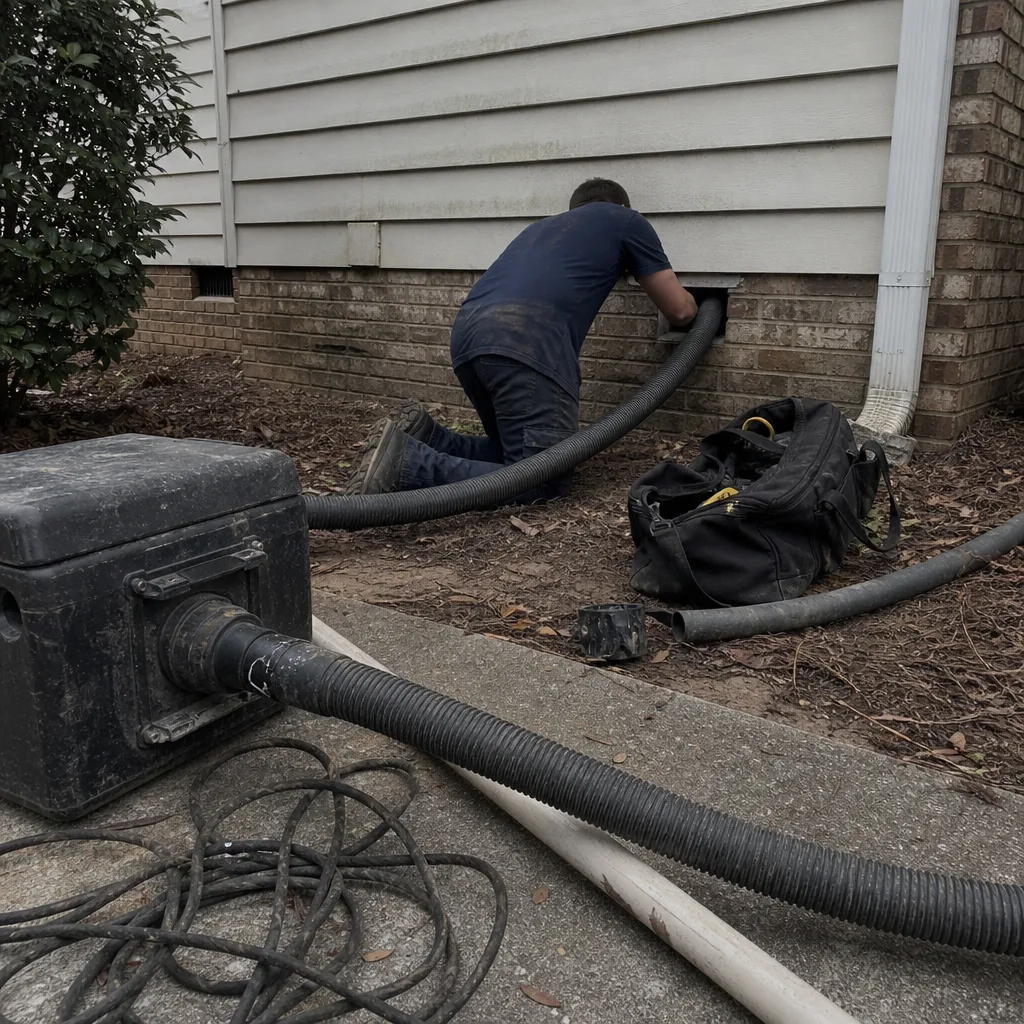 Before
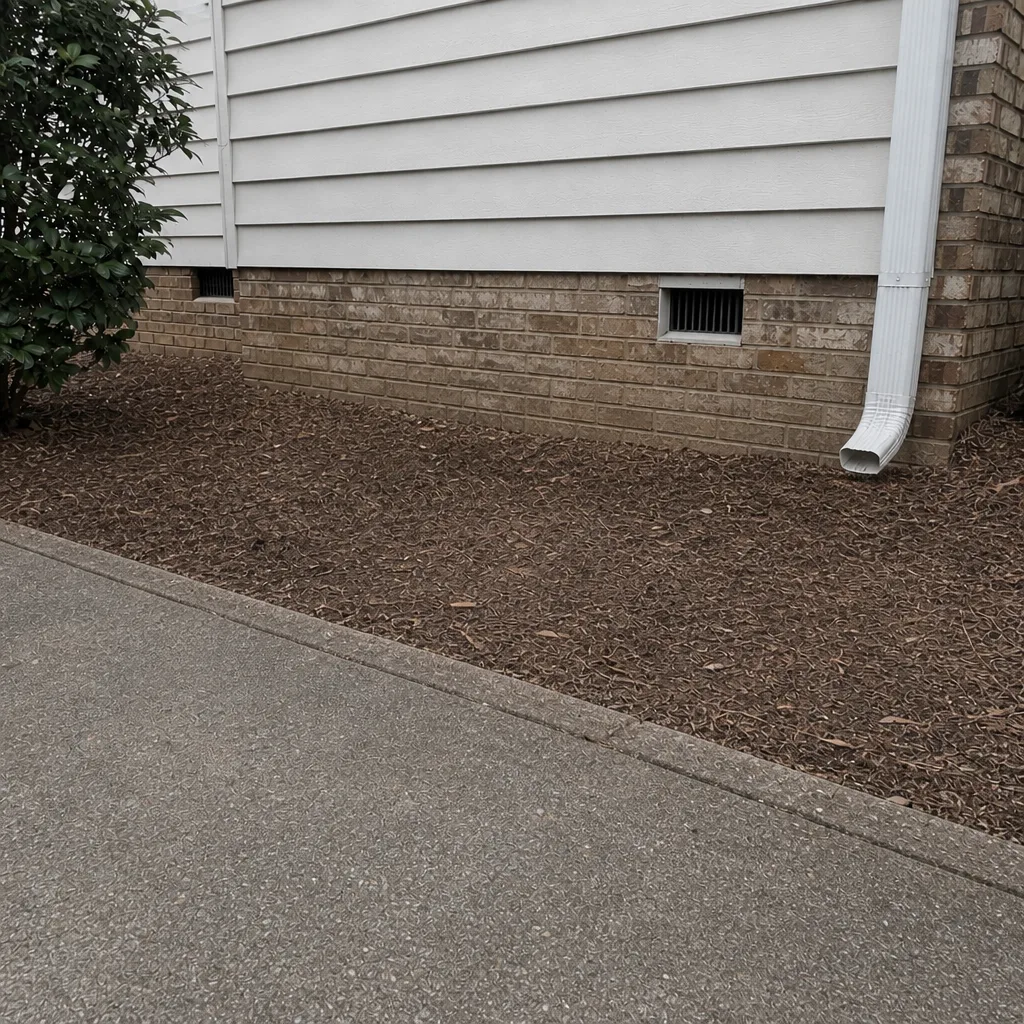 After
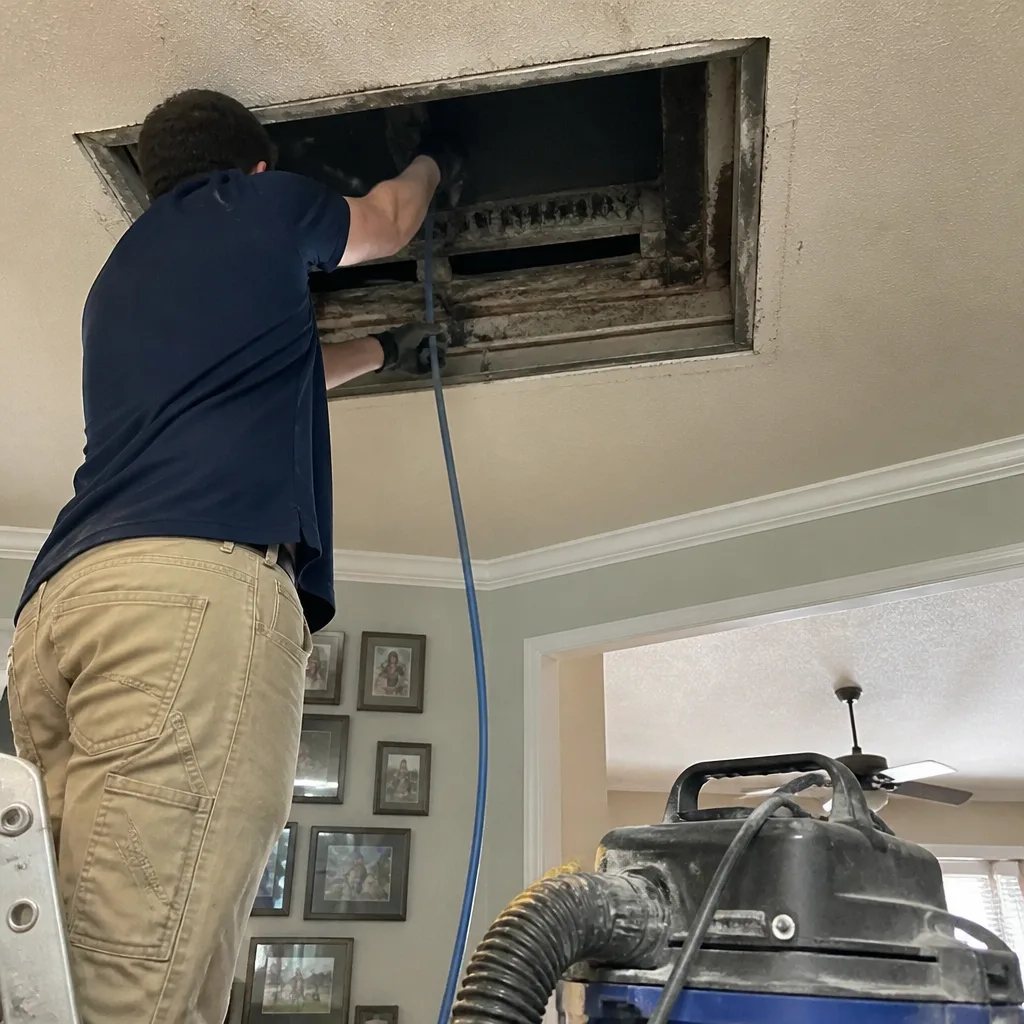 Before
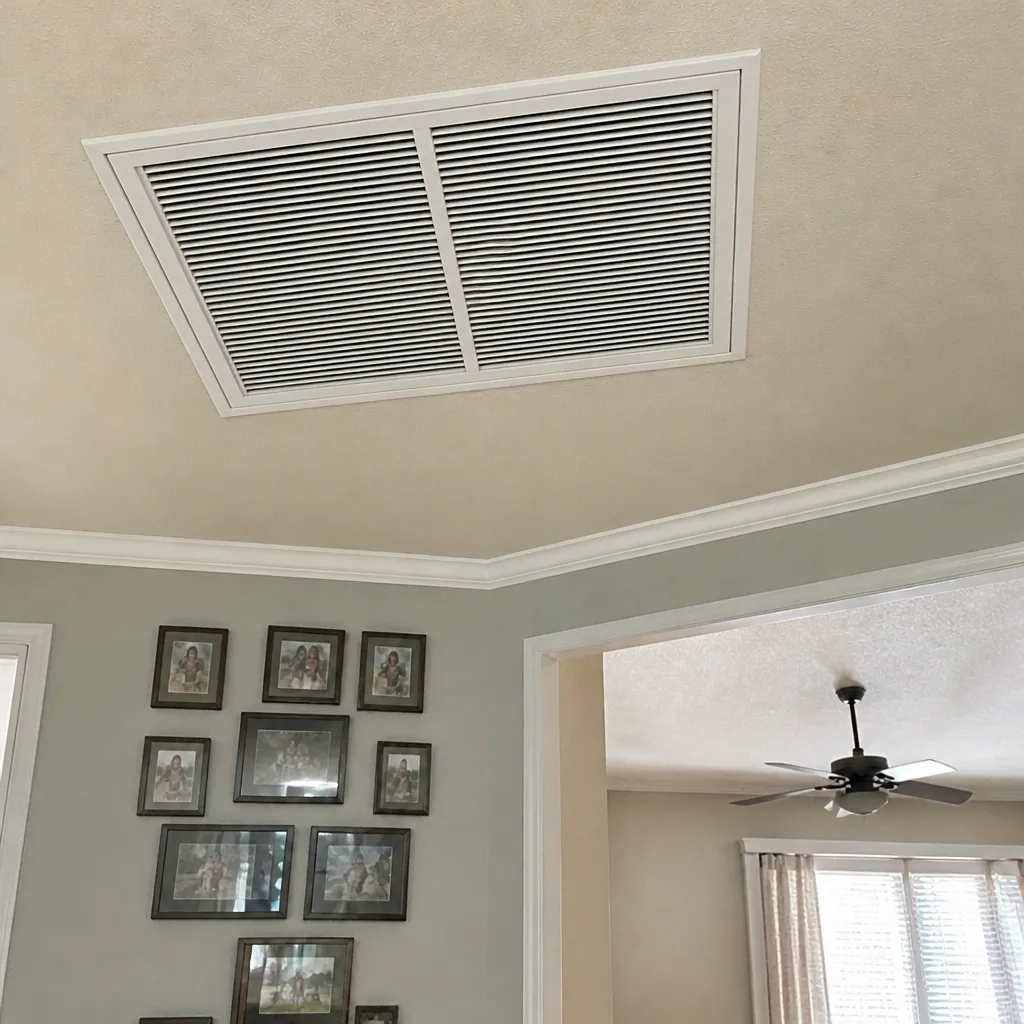 After
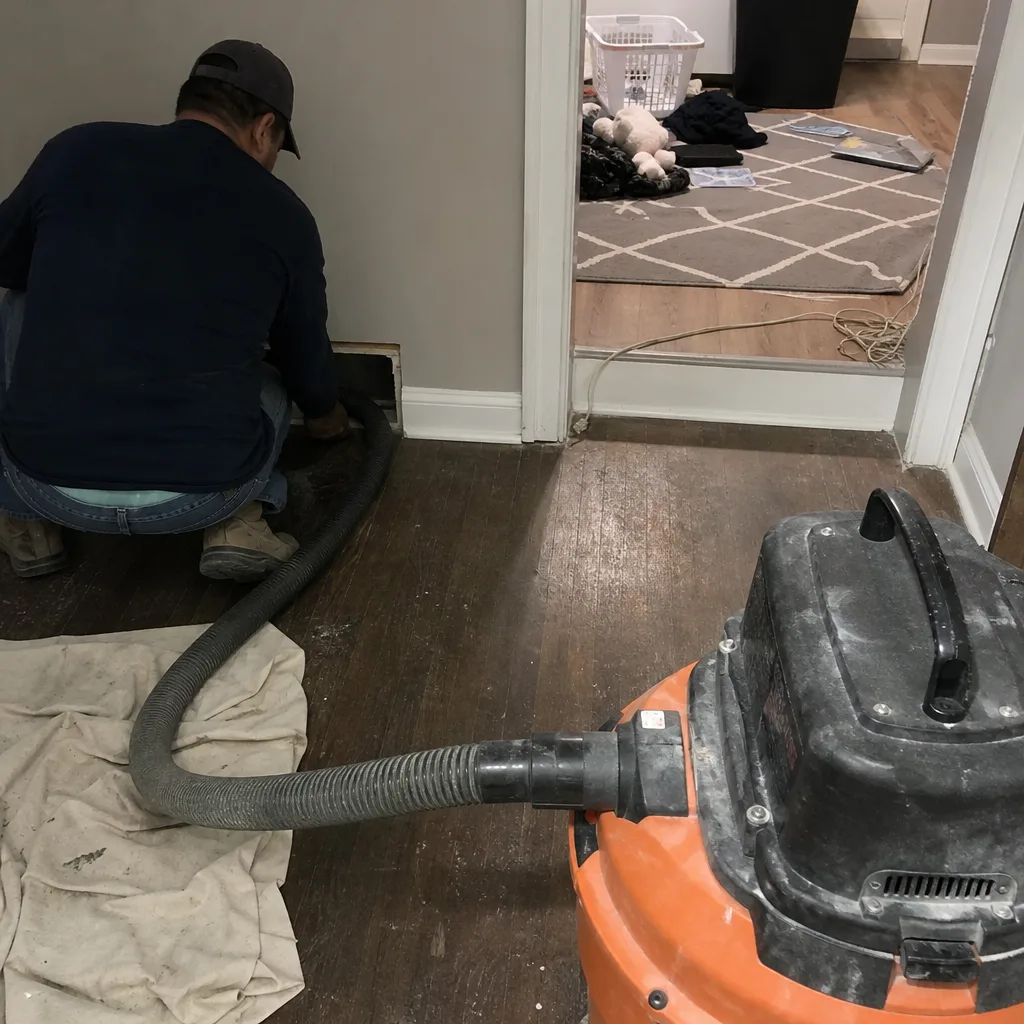 Before
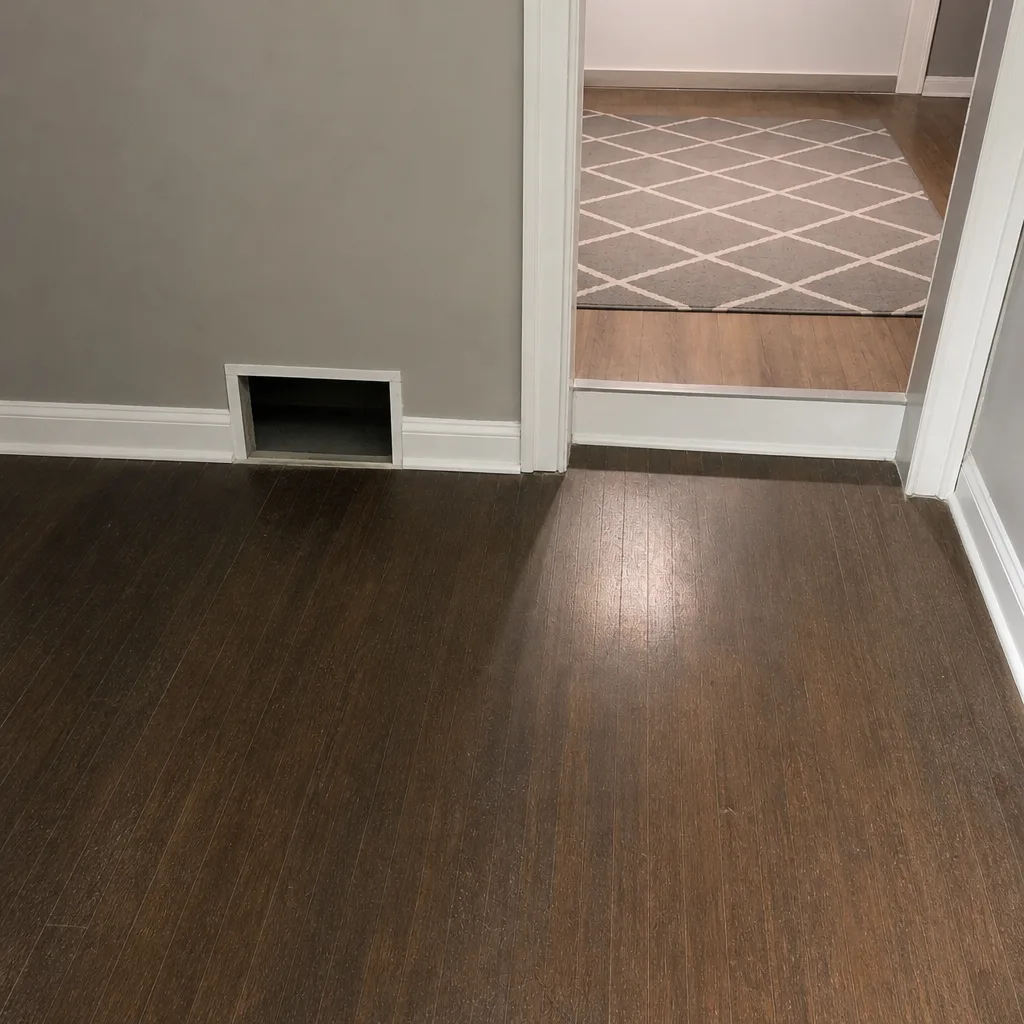 After
When to Call a Professional
Some jobs are homeowner checks; some are professional calls. Call a professional when you see visible dust buildup inside the ducts on a flashlight inspection, when there’s visible biological growth, when there’s been a flood, HVAC change, rodent activity, or renovation, or when anyone in the house has allergy or asthma symptoms that seem tied to the HVAC system. Call before you have a problem if you’re at the short end of your calculated interval and you want a baseline. Hartwell Air Duct Cleaning offers free estimates in Columbia, and we can work with your insurer if a water or smoke event is involved. Our technicians have up to 11 years of experience, and we use professional-grade equipment from Rotobrush and Nikro, not consumer gear.
For a full picture of what we do, see Hartwell Air Duct Cleaning. If you’re ready to schedule, call (866) 942-9804.
Frequently Asked Questions
Most Columbia homes fall between two and four years, with the shorter end for homes with pets, smokers, allergy sufferers, crawlspace ducts, or recent renovations. The national three-to-five year advice doesn’t account for Columbia’s humidity, pollen, or housing stock.
For an exact quote based on your home, call (866) 942-9804. Estimates are free.
Yes. High humidity keeps duct surfaces damp longer, which supports mold and mildew growth on the return side. Homes with continuous fan operation or short-cycling systems tend to need cleaning more often than the same house would in a drier climate.
Call (866) 942-9804 for an exact quote and a walkthrough of your system.
We price per system, not per vent, and the written estimate sets the final price. Typical residential cleanings land in a range that depends on the number of systems, the duct layout, and whether repair work is included. Call (866) 942-9804 for an exact quote. Estimates are free.
A very low quote usually reflects a different job: a shop-vac, no negative pressure, a grille wipe-down, or bait-and-switch pricing that grows once the technician is on site. Professional cleaning with contact agitation and negative pressure costs what it costs. When you’re comparing quotes, ask what equipment the company uses.
At Hartwell, one flat price per system is agreed before work starts, with no per-vent pricing. Call (866) 942-9804 to schedule.
Ask for before-and-after photos of the interior of your own ducts. Any company using professional equipment should have no trouble providing them. Photos also give you the baseline you’ll need to decide when the next cleaning is due.
Call (866) 942-9804 for a free estimate.
Yes, in both cases. Renovation dust and water intrusion are two of the events that reset the cleaning clock entirely. Cleaning should happen as part of the restoration or shortly after the work is finished. If water is involved, address the moisture source first.
Call (866) 942-9804 to schedule an assessment.
The Bottom Line
Your duct cleaning schedule should be calculated, not copied. Start with a three-to-four year base for Columbia, then subtract for pets, smoking, allergies, crawlspace ducts, and recent renovations. Do the four between-cleaning habits: filter, grille checks, condensate line, and return air path. Keep the before-and-after photos from a professional clean as your baseline. And treat floods, HVAC replacement, and rodent activity as automatic resets. The goal isn’t to clean on a calendar; it’s to clean when the evidence says it’s time. For a full service overview including air duct cleaning, dryer vent cleaning and duct repair, visit us. We’re local to Columbia and can help you set the right interval for your home.
Call Hartwell Air Duct Cleaning at (866) 942-9804 for a free estimate. We answer 24/7. Fast dispatch from 7am to 7pm, Sunday through Friday.
Written by the team at Hartwell Air Duct Cleaning.