
Last updated November 15, 2026
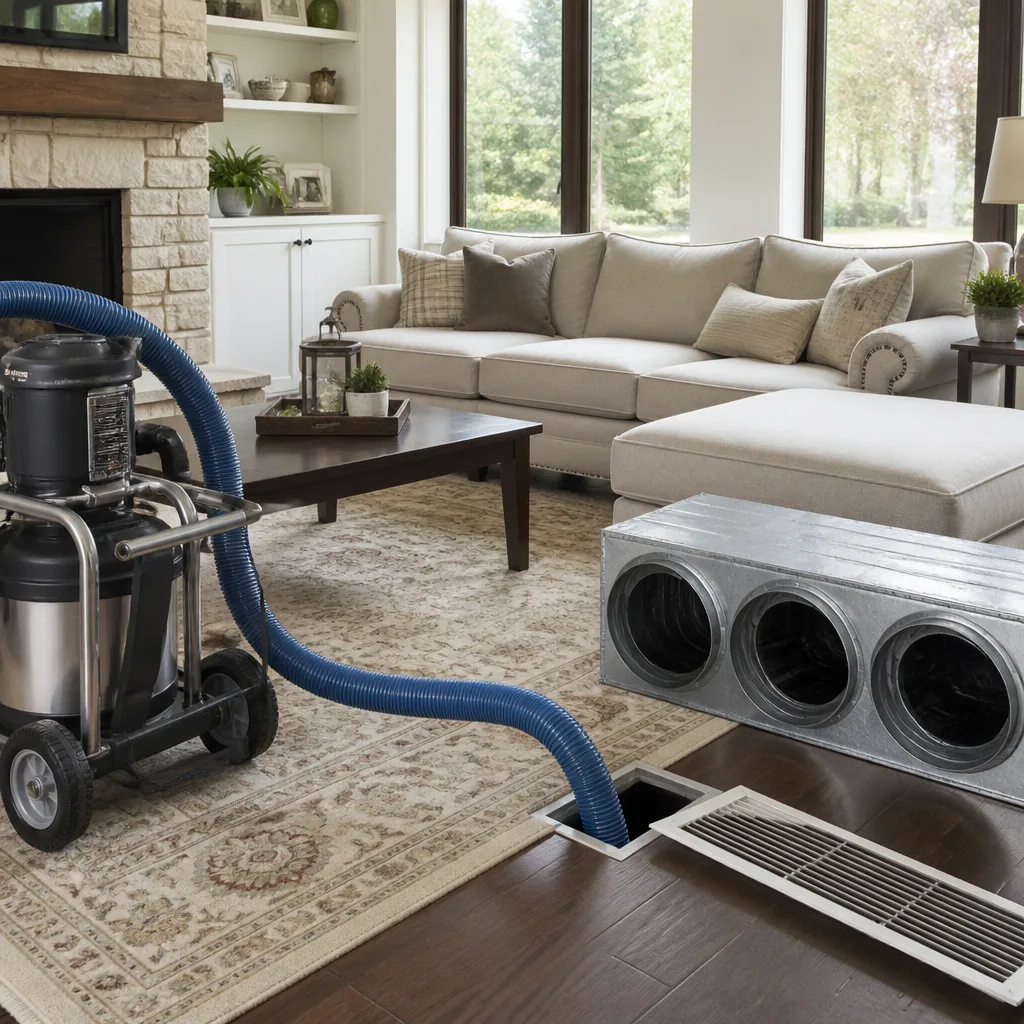 Whole-home duct cleaning
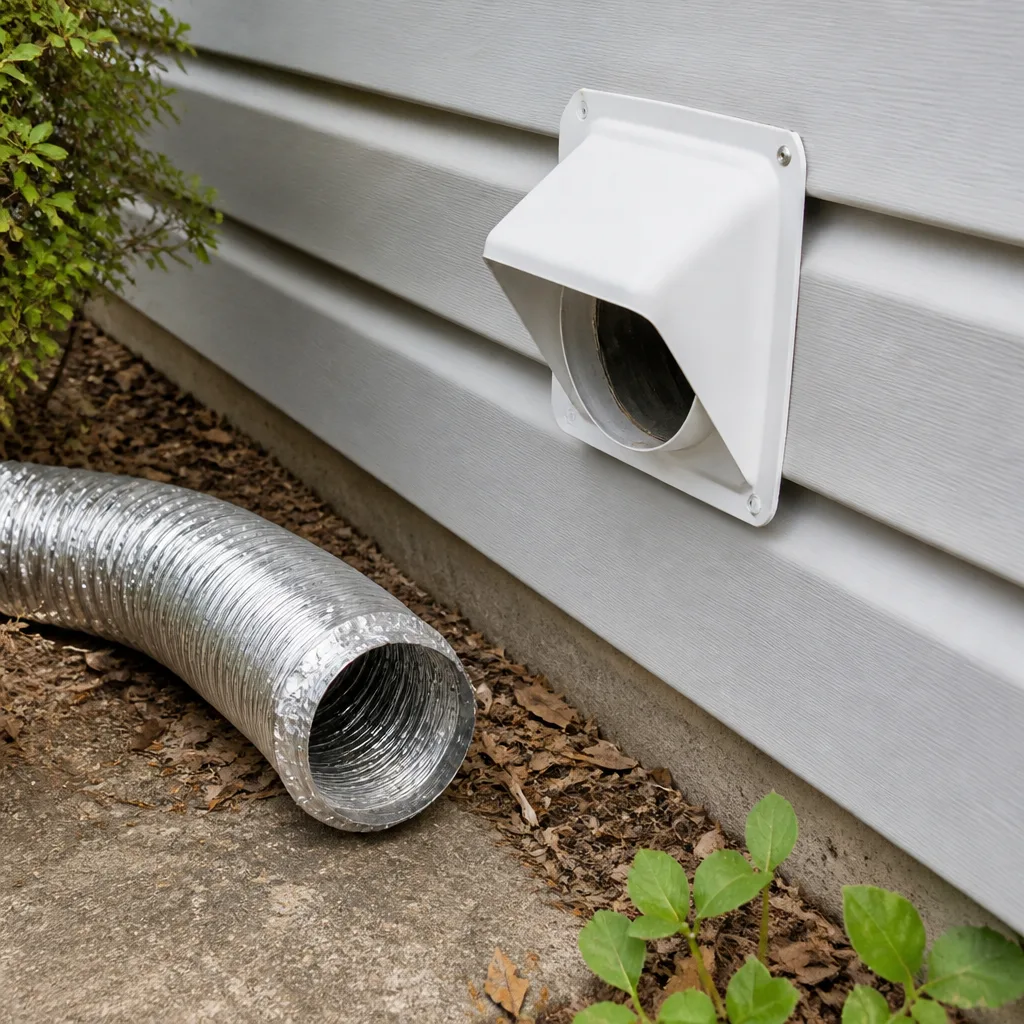 Dryer vent cleaning
 Camera inspection
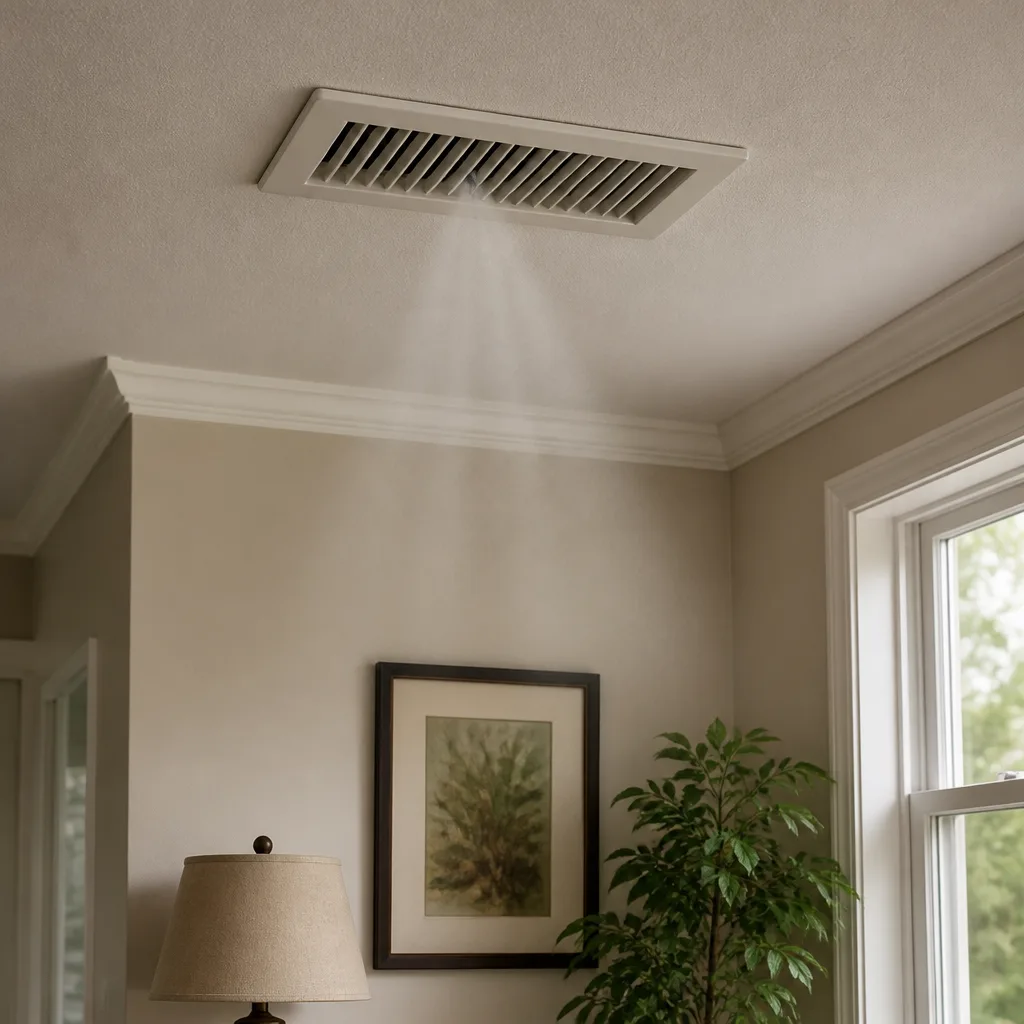 Sanitizing & deodorizing
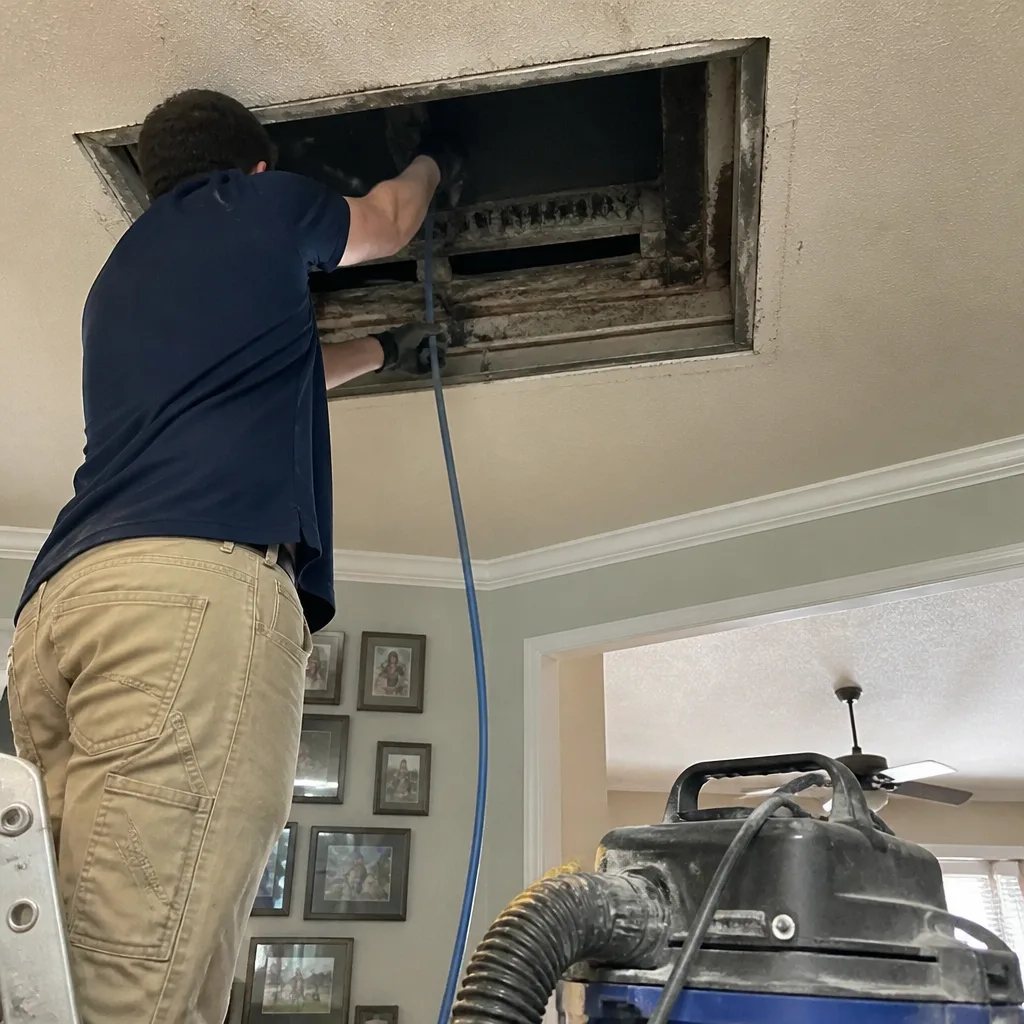
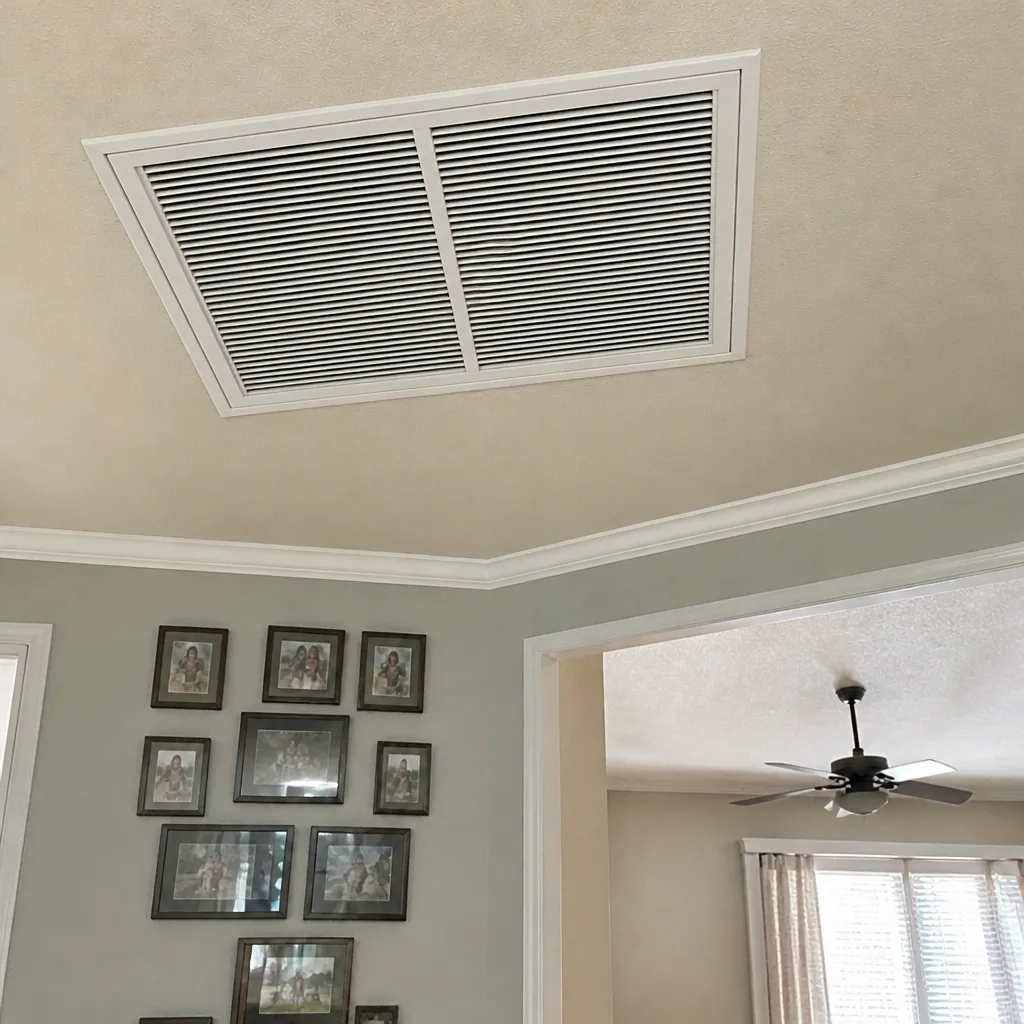
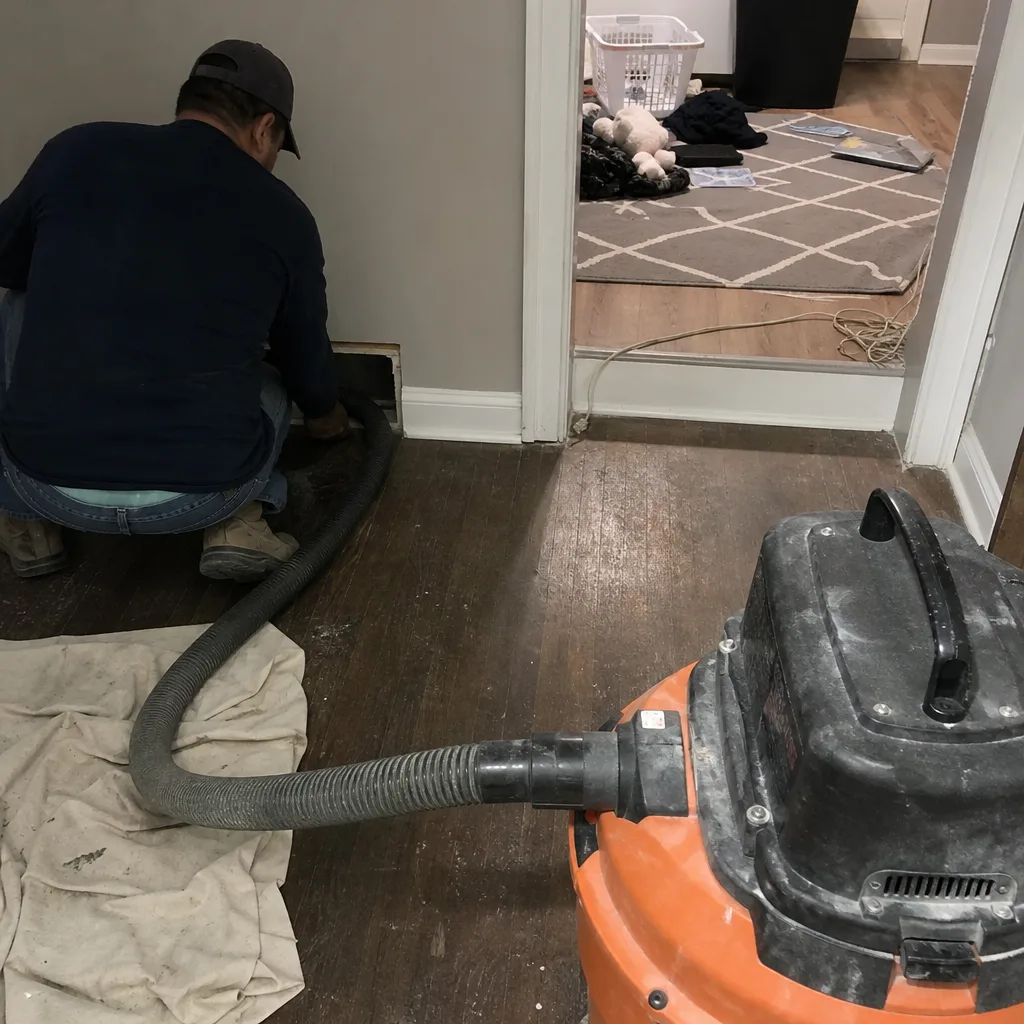
Whole-system duct and dryer vent check with before-and-after photos - you see exactly what came out of your vents
That "$99 whole-house special" is a bait ad - the real number appears once they are in your hallway, or the "clean" is a shop-vac at the register. We photograph the inside of your ducts before and after instead.
Air Duct Cleaning Warning Signs: A Columbia Homeowner’s Reference Guide
The warning sign that matters most usually doesn’t look like a warning sign. It looks like a spare bedroom that never quite cools down anymore, or a house that seems to run a little warmer than it did a few summers ago. Most Columbia homeowners chalk that up to the weather, an aging AC unit, or just how the house has always been. In our experience, that slow, easy-to-explain-away performance drop is often the first thing a duct problem shows you, long before anything dramatic appears. This guide is organized around what you actually notice first, working backward to the duct causes behind it, and it separates the signs that call for a cleaning from the ones that call for an inspection first.
Quick Answer
The most common air duct warning signs are uneven room temperatures, a musty smell that shows up when the system starts, visible dust streaks around registers, and utility bills that climb without a clear reason. In Columbia, the signs worth taking seriously also include sagging or disconnected ducts in pier-and-beam crawlspaces and aging flex duct from the 1980s and 1990s that has reached the end of its service life. Some of these point to a cleaning, and some point to repair that cleaning alone won’t fix.
Styles & brands we work with
- Whole-home duct cleaning
- Dryer vent cleaning
- Camera inspection
- Sanitizing & deodorizing
Table of Contents
- Start With What You Notice: A Symptom-First Approach
- Reading Your Registers: Normal Dust vs. Trouble Patterns
- How to Tell Duct Problems From Equipment Problems
- Signs Specific to Columbia’s Housing Stock
- Cleaning or Inspection? Knowing the Difference
- Rising Bills and Weak Airflow: What They Tell You
- Smells, Moisture, and What They Point To
- When to Call a Professional
Start With What You Notice: A Symptom-First Approach
Most guides to duct problems start with what a technician sees on a scope and work forward. That’s backward for a homeowner. You don’t have a camera in your ducts, but you do live in the house every day, and the things you notice are real data. A symptom-first approach means you start from the room that won’t cool, the smell at startup, or the bill that jumped, and work backward to the most likely cause. That ordering matters because it keeps you from paying for a cleaning when the real problem is a disconnected duct, or replacing equipment when the ducts are the actual issue.
Here’s how we think about the symptoms homeowners bring us in Columbia, grouped by what they usually mean:
- Temperature complaints (one room hot, one room cold, rooms that drift apart over the season) usually point to airflow: a blocked run, a crushed flex duct, or a joint that has separated.
- Smell complaints (musty at startup, dusty all the time) usually point to what’s sitting inside the duct surface or in the return path.
- Bill complaints (cost creeping up with no rate change) usually point to leakage or restricted airflow making the equipment work harder.
- Visible complaints (dust streaks, debris at the register, sagging duct in the crawlspace) usually point to a specific, locatable problem you can inspect directly.
Each of these has a different next step. A musty smell that clears once the system has run a minute is usually a cleaning conversation. A room that has never cooled well since you moved in is often a design or balance issue, and it’s worth confirming before anyone quotes a cleaning. In Columbia, where summers run long and the AC works hard, these symptoms tend to show up sooner and get blamed on the equipment more often than they should.
Reading Your Registers: Normal Dust vs. Trouble Patterns
Every register collects some dust. The question is whether the pattern is even and light or concentrated and directional. Normal accumulation is a thin, fairly uniform film across the grille and the fins, building up slowly between cleanings. Trouble looks different, and once you know what to look for, you can spot it in a few seconds with a flashlight.
Patterns that suggest turbulence from a blockage or a damaged duct:
- Dust concentrated on one side of a register, or streaking that points in a clear direction, suggests air is escaping at an angle rather than flowing straight. That often means a joint upstream has opened or a duct has been crushed.
- A dark ring or halo of dust around the register frame suggests air is leaking past the boot where the duct meets the wall or floor. Leakage at the boot pulls dust from the wall cavity, not just the duct.
- Heavy dust on some registers and almost none on others in the same house suggests uneven flow, which points to a blockage or a balance problem rather than a whole-system dust issue.
- Gritty or sandy debris on the register face, rather than soft dust, often comes from a crawlspace duct that has come apart and is drawing soil into the airstream.
That last one is the pattern we see most in Columbia’s pier-and-beam homes, and it’s the one most often missed. A homeowner sees grit on a vent, wipes it off, and moves on. What the grit is telling you is that the duct has opened somewhere below the floor and the system is pulling crawlspace air. If you see grit or soil at a register, that’s a duct integrity question, and it’s worth an inspection before a cleaning. For a sense of what the full service covers when you do need it, our air duct cleaning page walks through the process from the return path to the supply runs.
How to Tell Duct Problems From Equipment Problems
Before you call anyone, you can narrow the cause considerably with two simple checks that don’t require tools or a ladder. These won’t diagnose everything, and they won’t tell you the condition inside the ducts, but they’ll separate an airflow problem from an equipment problem well enough to know what kind of call to make.
- The tissue test at each register. Hold a tissue or a piece of paper towel against a supply register while the system is running. It should be held firmly against the grille by the airflow. A register that barely holds the tissue, or lets it fall, has weak flow. If one or two registers are weak and the rest are strong, you have a duct or balance problem, not an equipment problem.
- The filter and return check. Pull the filter and look at it against a light. A filter that’s dark across the whole face is just due for a change. Check the return grille too: a return that’s been partly covered by furniture or a rug starves the whole system and mimics a duct problem. If the filter is clean, the return is clear, and registers are still weak, the restriction is downstream in the ducts.
One more useful distinction: equipment problems usually show up as a system that runs constantly, short-cycles, or won’t hold a temperature in any room. Duct problems usually show up as some rooms that are fine and some that aren’t, or a system that reaches temperature but takes far longer than it should. If the whole house is warm and the unit is running nonstop, start with the equipment. If the house is half comfortable and half not, start with the ducts. In Columbia, where the cooling season is long, that split pattern is the single most useful clue a homeowner has.
Signs Specific to Columbia’s Housing Stock
Columbia’s housing mix produces a few duct failure patterns that don’t show up in every market, and knowing them helps you look in the right place. The two that matter most are pier-and-beam crawlspace homes and the flex duct installed through the 1980s and 1990s.
Pier-and-beam crawlspace homes
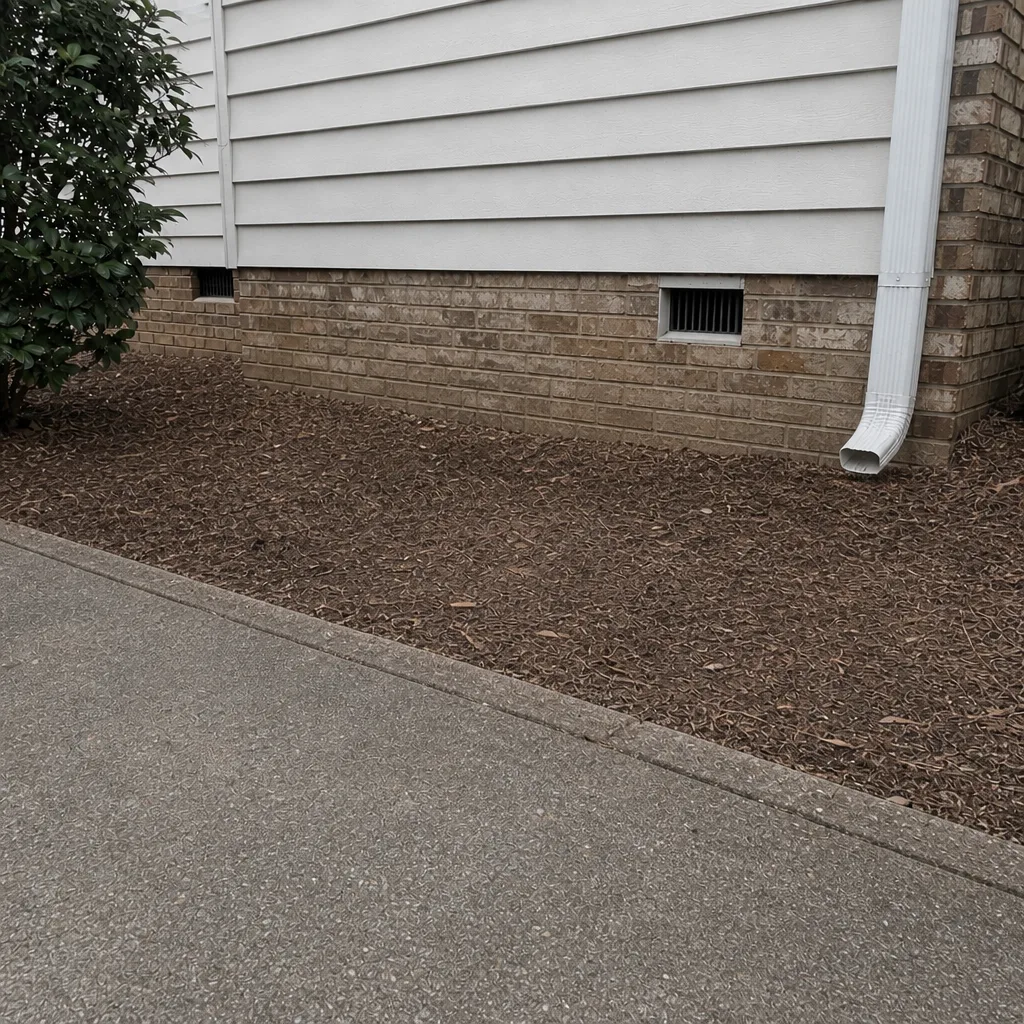
A lot of older Columbia homes sit on a raised pier-and-beam foundation, with the duct system running through the crawlspace under the floor. That layout is efficient to install and hard to keep sealed. The duct runs are exposed to crawlspace humidity, to soil, and to anything that moves under the house, and the joints between sections take the load. When a duct separates or a boot pulls loose under the floor, you often don’t see it from inside the house. What you see instead is grit at a register, a room that won’t cool, or a bill that climbs. Duct separation under a pier-and-beam floor is one of the most commonly undetected failures we come across in Columbia, and it’s the reason the grit pattern in the last section matters so much here.
1980s and 1990s flex duct at end of life
Much of Columbia’s suburban housing was built with flexible duct, and a good share of that original flex is now well past its expected service life. Flex duct degrades from the inside: the inner liner can tear, sag, or collapse, and the outer jacket can separate. A run that sags between supports becomes a low point where dust and moisture collect, and a collapsed run restricts flow without ever looking damaged from the outside. If your home was built in that window and still has the original duct, it’s worth having the runs inspected even if nothing has gone wrong yet. On the air quality side, the equipment and filtration brands that good contractors work with, like Honeywell and Aprilaire, are designed around a duct system that actually holds its shape and seals. Cleaning what those systems depend on only helps once the pathways are intact. Our Columbia page covers the neighborhoods and housing types we work in across the city.
Cleaning or Inspection? Knowing the Difference
Not every warning sign means “clean the ducts.” Some mean “inspect the ducts first,” because the problem is damage that a cleaning won’t touch or, worse, a condition a vacuum will make no better. Getting this distinction right saves money and gets the real problem fixed. Here’s the threshold we use.
Signs that usually call for an inspection first:
- Grit, soil, or sandy debris at a register, which points to a separated duct.
- A crawlspace duct that’s visibly sagging, disconnected, or lying in moisture.
- Dust streaking around a register frame, which suggests leakage at the boot.
- A room that has never cooled well, which may be a design or balance issue.
- Any home built in the 1980s or 1990s still on original flex duct.
Signs that usually call for a cleaning:
- A musty smell that shows up when the system starts and fades after.
- Even, light dust across many registers that builds up faster than it used to.
- Visible dust in the return path with no other symptoms.
The reason to make the distinction is that cleaning a leaking or broken duct doesn’t fix the leak. If anything, a system that pulls crawlspace air needs the duct sealed and repaired before the cleaning holds, which is why we keep air duct repair as a service alongside cleaning. Source removal with professional equipment only works on a pathway that’s intact. If the sign you’re seeing is grit at a register or a sagging crawlspace run, schedule the inspection first and let the cleaning follow the fix.
Rising Bills and Weak Airflow: What They Tell You
A climbing utility bill with no rate change is one of the clearest duct signals there is, and it’s also the easiest to explain away. A system with leaking or restricted ducts runs longer to reach the same temperature, and it runs harder when a supply run is restricted. The effect is gradual, so it rarely feels like a problem until the bill has crept up over two or three seasons. What you’re looking for is a trend: the same house, the same habits, a bill that keeps rising.
Pair the bill with airflow and you can narrow the cause further. When a leaky duct sits in a crawlspace, the system is effectively conditioning the crawlspace as well as the house, which shows up as longer run times. When a run is crushed or sagging, the rooms at the end of that run get less air and the system compensates by pushing harder. Both show up as higher bills, but they feel different: leakage makes the whole house slower to cool, while restricted flow makes specific rooms stubborn.
Weak airflow by itself isn’t a duct death sentence. A clogged filter, a closed damper, or a return that’s been blocked all mimic weak ducts. That’s why we recommend the checks in the airflow section before assuming the ducts are the problem. But if the filter is clean, the dampers are open, the return is clear, and registers are still weak, the restriction is in the ducts and it’s worth having someone look. Professional negative-pressure equipment, the kind of setup used with Nikro and Rotobrush systems, is what lets a technician clear and verify a restriction rather than guess at it.
Smells, Moisture, and What They Point To
Smell is one of the best diagnostic signals you have, because it’s tied to time. A musty smell in the first thirty seconds after the system starts points to the return path and the ducts: air sitting in the ducts between cycles picks up the smell of the surface it’s sitting against, then delivers it when the system starts. A musty smell that’s constant points more toward the air handler, a drain pan, or a coil. The difference matters for what to do next.
- Musty at startup, fades after: usually a duct-surface or return-path issue, and a cleaning conversation.
- Musty all the time: usually equipment-side moisture (a wet pan or coil), and an equipment conversation.
- Dusty, dry smell that never fully clears: often accumulated dust in the ducts and a sign to check the filtration.
- Damp or earthy smell with grit at a register: points to a duct drawing crawlspace air, and an inspection.
Columbia’s humidity makes this the hardest symptom to read, because the air itself carries a damp note much of the year. The useful move is to compare: does the smell get noticeably stronger right at startup, before the house air has had time to mix? That timing is what separates a duct issue from general humidity. On the filtration side, working with recognized brands like Aprilaire and Honeywell, and abatement-grade filtration like Abatement Technologies and Guardsman, means the filter stage and the ducts are matched rather than treated in isolation. Where those products belong in your system depends on the equipment you have, which is a conversation for the estimate.
When to Call a Professional
Some signs are worth watching, and some are worth a call. Call a professional when you see grit or soil at a register, a crawlspace duct that’s visibly sagging or disconnected, a room that won’t cool after the airflow checks come back clean, a bill that has climbed for two or three seasons, or a musty smell that shows up at every startup. Call before you run a cleaning, because several of those signs point to repair, not just dirt. Dust that returns faster than it used to, across many registers, is the other clear call. Our dryer vent cleaning service is a separate and equally important part of the same picture, since a clogged dryer vent is a fire risk independent of what your ducts are doing. Hartwell Air Duct Cleaning offers free estimates in Columbia. Call (866) 942-9804. We answer 24/7. Fast dispatch from 7am to 7pm, Sunday through Friday.
See the difference
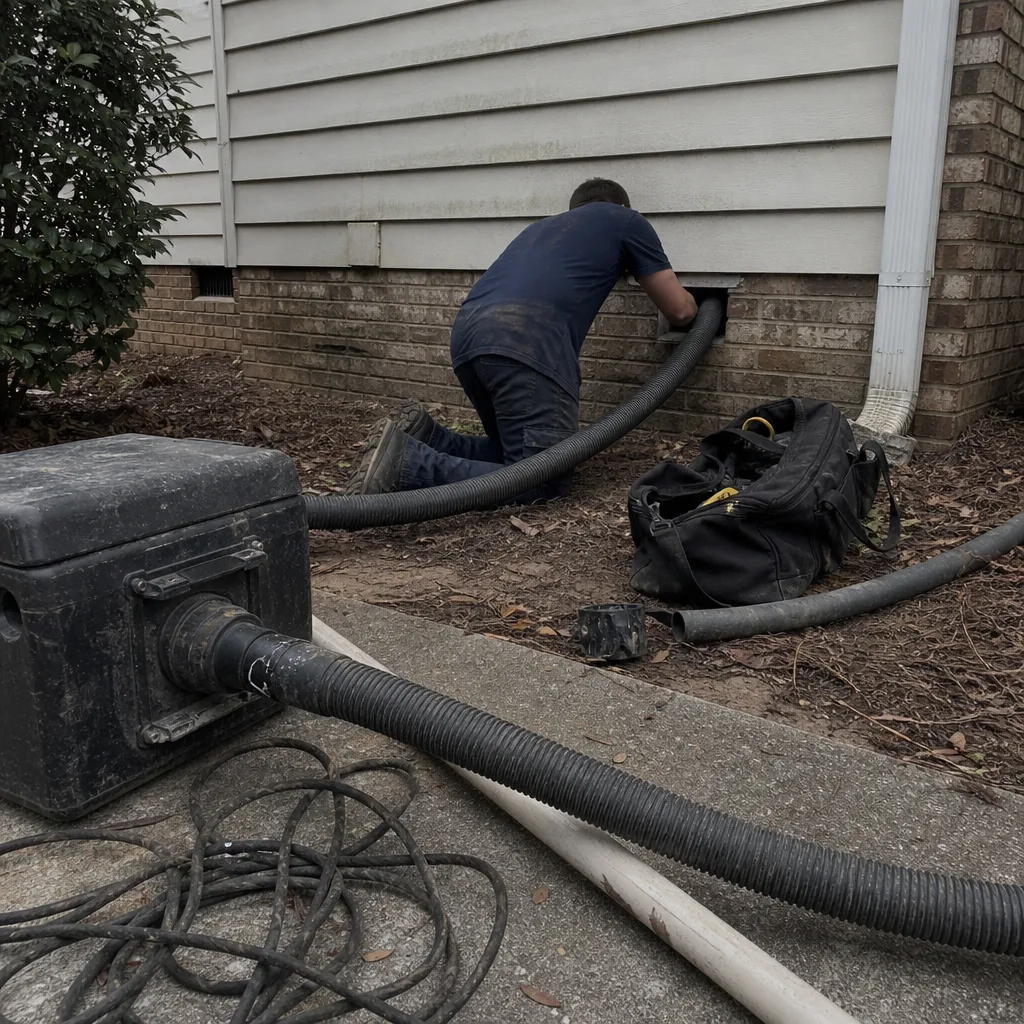 Before
 After
 Before
 After
 Before
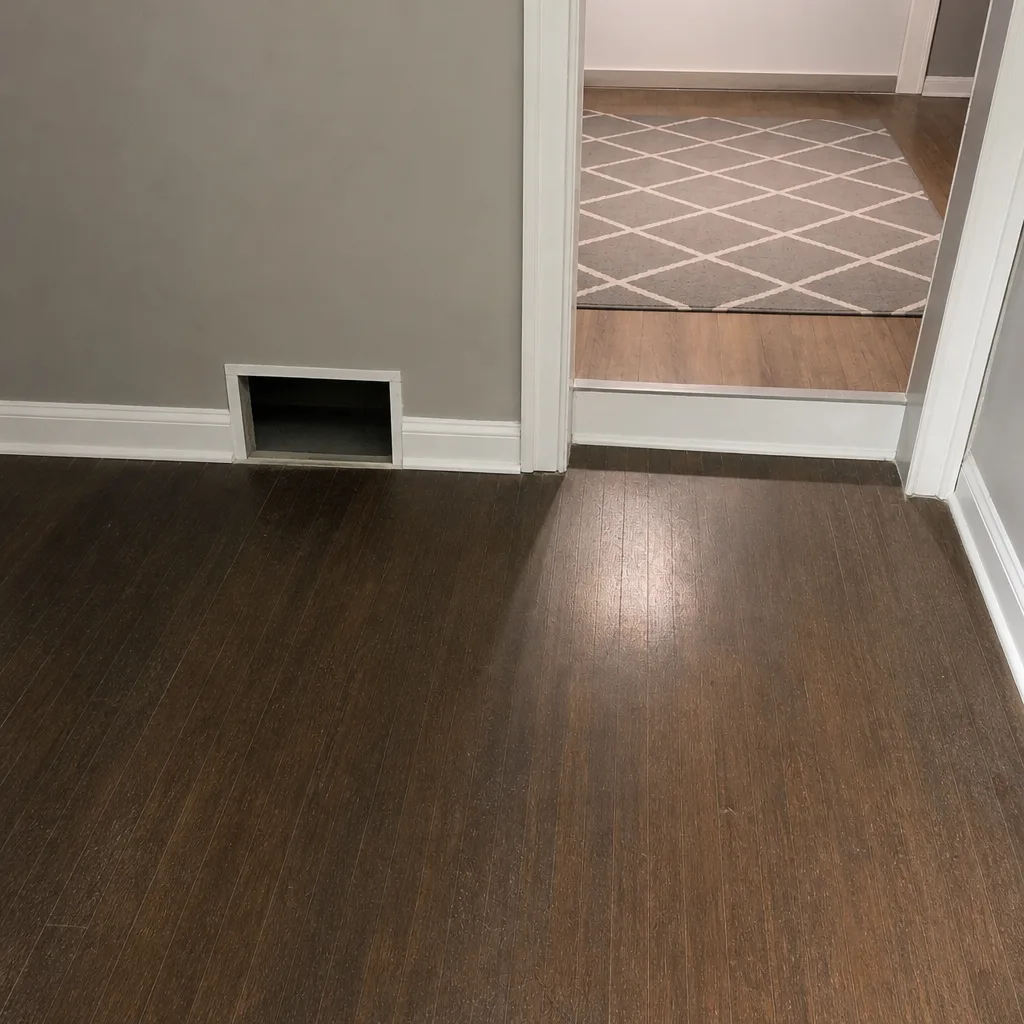 After
Common Mistakes to Avoid
- Assuming slow cooling means the AC is failing. Homeowners often replace equipment before anyone checks the ducts. A split pattern of weak registers points to the ducts first, and a technician can confirm before you spend on a new unit.
- Buying a cleaning to fix a dust problem that’s actually leakage. If dust is being pulled from the crawlspace, cleaning the ducts won’t stop it coming back. Fix the leak, then clean.
- Ignoring grit at a register. In Columbia’s pier-and-beam homes, grit means a duct has opened under the floor. It’s the sign most often wiped off and forgotten.
- Skipping the dryer vent. It’s a separate system with its own fire risk, and it needs its own service. Don’t assume duct cleaning covers it.
- Trusting a shop-vac and a coupon to clean a full system. Professional-grade contact-cleaning and negative-pressure equipment does the work; consumer-grade vacuums don’t, and they can stir dust back into the house.
- Skipping the airflow checks. A covered return or a clogged filter mimics a duct problem. Two minutes with a tissue and a flashlight saves a wasted call.
- Cleaning original 1980s flex without inspecting it. Old flex can be torn or collapsed inside. Inspect first, clean after the runs are sound.
Frequently Asked Questions
The most useful early sign is uneven room temperatures: some rooms comfortable, some not, with the split growing worse over the season. In Columbia’s pier-and-beam homes, grit or soil at a register is also a strong sign, because it often means a duct has separated below the floor. Call (866) 942-9804 for a free estimate if you see either.
Check the airflow at each register with a tissue. Weak flow at one or two registers while the rest are strong points to the ducts; weak everywhere points to the equipment or the return path. A clean filter and clear return with weak registers means the restriction is in the ducts. When in doubt, an inspection sorts it out before you spend on repairs.
Usually, yes. A smell that shows up in the first thirty seconds after the system starts and fades after points to the return path and ducts. A smell that never clears points more toward a drain pan or coil, which is an equipment issue. Call (866) 942-9804 for a free estimate and we’ll help you tell the difference.
It depends on the house, not a fixed calendar. Homes with pets, recent renovation, or visible dust that returns fast usually need it sooner, while a sealed, well-maintained system may go much longer. Watch for the signs in this guide rather than a number. Call (866) 942-9804 for a free estimate.
It’s worth an inspection. Flex duct from the 1980s and 1990s is reaching the end of its expected service life, and it can degrade from the inside without looking damaged from the outside. A collapsed or torn run restricts flow and drives up bills. Cleaning won’t fix a torn run, so inspect first. Call (866) 942-9804 for a free estimate.
Not on a full system. Consumer vacuums and shop-vacs don’t have the suction, containment, or reach to clear a full duct system, and they can stir dust into the living space. Professional contact cleaning and negative-pressure equipment is what does the job. Call (866) 942-9804 for a free estimate.
The Bottom Line
Duct problems rarely announce themselves. They show up as a room that runs warm, a smell at startup, a bill that creeps up, or grit on a register. The work is to notice them and to sort them: some point to a cleaning, and some point to repair that has to come first. Columbia’s pier-and-beam crawlspaces and aging 1980s and 1990s flex duct make both especially worth watching. Our technicians have up to 11 years of experience, and we clean and repair, so one call covers it. Hartwell Air Duct Cleaning offers free estimates in Columbia. Call (866) 942-9804. We answer 24/7. Fast dispatch from 7am to 7pm, Sunday through Friday.
Written by the team at Hartwell Air Duct Cleaning.