
Last updated November 15, 2026
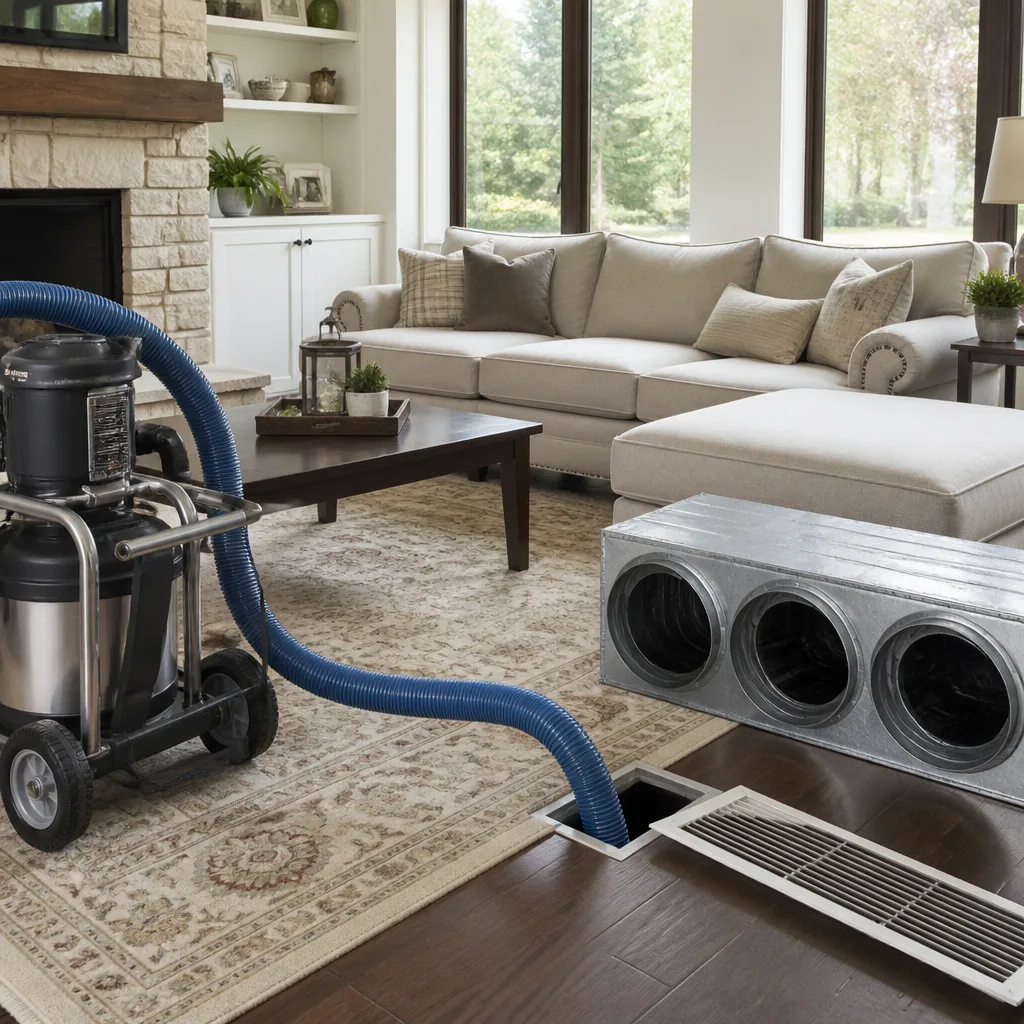 Whole-home duct cleaning
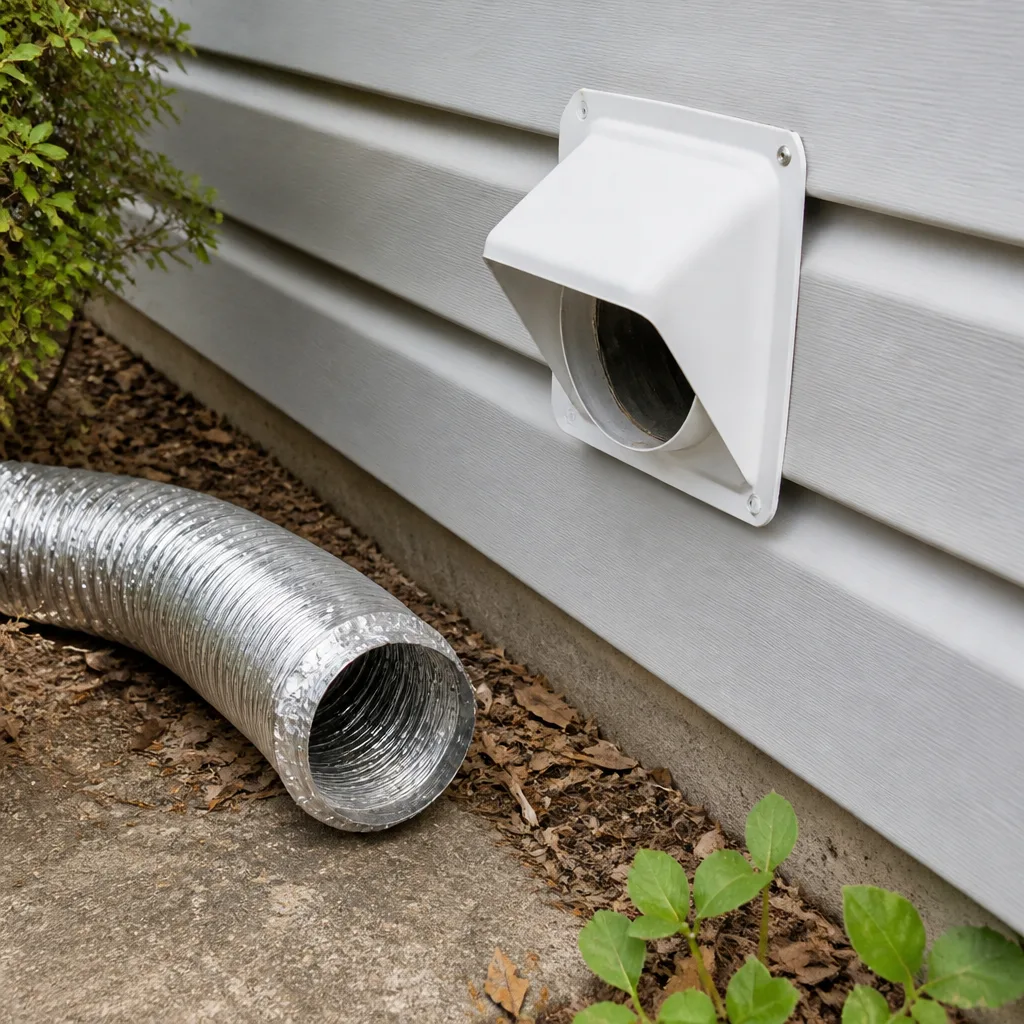 Dryer vent cleaning
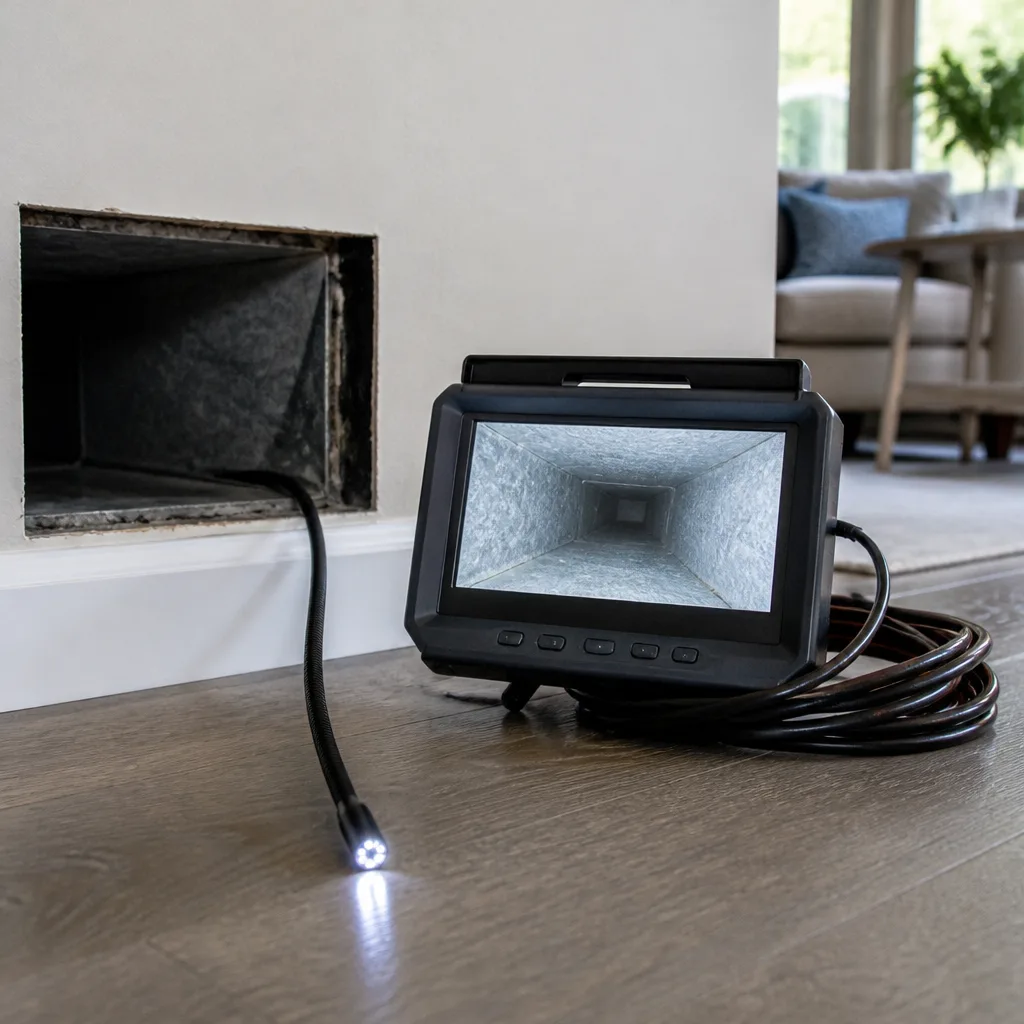 Camera inspection
 Sanitizing & deodorizing
Whole-system duct and dryer vent check with before-and-after photos - you see exactly what came out of your vents
That "$99 whole-house special" is a bait ad - the real number appears once they are in your hallway, or the "clean" is a shop-vac at the register. We photograph the inside of your ducts before and after instead.
DIY vs Professional Air Duct Cleaning: The Columbia Homeowner’s Decision Guide
Most people asking “can I clean my own air ducts?” are really asking a different question: is the gap between a rented shop vac and a real duct cleaning crew about effort, or about something else entirely? It’s about something else. The decision doesn’t hinge on how hard you’re willing to scrub. It hinges on physics that a consumer tool can’t overcome, no matter how carefully you work. The single biggest factor is airflow: how many cubic feet per minute a machine can move through your ductwork while keeping the dust contained. This guide explains that gap plainly, shows you what you genuinely can handle yourself, and tells you when a Columbia duct problem needs a professional on site.
Quick Answer
A shop vacuum pulls roughly 100 CFM. Professional source-removal cleaning runs on 2,000 CFM or more of continuous negative pressure, which is the difference between stirring up debris and extracting it. If your ducts are visibly dirty, your airflow has dropped, or you have flex duct, moisture, or pest evidence, hire a pro. If you just want to clean the grilles and clear dryer lint, that’s a job you can do well yourself.
Styles & brands we work with
- Whole-home duct cleaning
- Dryer vent cleaning
- Camera inspection
- Sanitizing & deodorizing
Table of Contents
- Why the DIY vs. Pro Question Is Really About CFM
- What Source Removal Actually Means
- What You Can Honestly DIY
- When DIY Makes the Job Harder and More Expensive
- The Real Cost of Doing It Yourself
- Columbia Conditions That Tip the Scale
- How to Tell Which Side of the Line You’re On
- How to Judge a Professional Before You Book
Why the DIY vs. Pro Question Is Really About CFM
A standard shop vacuum generates around 100 CFM of suction. Professional source-removal cleaning needs something on the order of 2,000 CFM of continuous negative pressure to work correctly. That’s a twentyfold gap, and it isn’t a marketing number. It’s the difference between a machine that can lift dust off a floor and a machine that can pull an entire duct run into a controlled vacuum state while a technician works inside it.
Here’s the part that matters most. Contact cleaning and extraction have to happen at the same time. A technician sends a rotating brush and a high-pressure air whip through the duct while a negative-pressure machine pulls the entire system into a vacuum. The brush loosens the debris, the airflow captures it, and the containment filter traps it so it leaves the house entirely.
When you run a shop vac through a register, only half of that equation exists. You have a little suction at one opening and no containment at any other. The moment you disturb settled debris, some of it escapes through every other register, gap, and return in the house. You haven’t cleaned the ducts. You’ve redistributed the dust into the rooms you breathe in.
This is why we talk about equipment before we talk about skill. If you want to understand what professional-grade equipment looks like in practice, our Hartwell Air Duct Cleaning page walks through the Rotobrush contact-cleaning and Nikro negative-pressure systems directly. The machinery is the reason the work is a specialized category rather than a chore.
What Source Removal Actually Means
Source removal is the industry term for taking the contamination out of the system rather than knocking it loose inside the house. Every credible duct cleaning method uses it. Every weak method skips it. The label on the invoice tells you which one you received.
Professional source-removal cleaning follows a sequence:
- Negative pressure first. A high-volume vacuum ties into the system before any tool goes inside. The whole duct network becomes a sealed vacuum zone. This step happens before cleaning for a reason; without it, every later step sprays debris into the home.
- Contact agitation. A rotating brush system goes through each supply and return run, breaking the bonded layer of dust off the duct wall. This is the Rotobrush stage.
- High-pressure air whipping. For larger trunk lines and plenum areas, an air whip drives loose material toward the negative-pressure intake.
- Containment and filtration. The vacuum’s HEPA filtration holds everything captured. Nothing is exhausted back into living spaces.
- Verification. Brushes come out, the vacuum runs clean, and the technician checks the return side and plenum for anything the first pass missed.
Notice what’s missing from this list: brute force. The cleaning isn’t stronger because a person scrubbed harder. It’s stronger because air moving at industrial volume does the work while a technician guides it. The filtration side matters just as much. Filter media built for abatement work, the kind of filtration Abatement Technologies and Guardsman produce, holds fine particulate that a shop-vac filter bag simply doesn’t have the design to catch.
Understanding this sequence is what separates a genuinely clean system from a temporarily less-dirty one. That distinction rides underneath almost every duct complaint people bring us.
What You Can Honestly DIY
Plenty of routine air pathway maintenance belongs in your hands, and we’d rather tell you that than sell you a cleaning you don’t need. Here’s what a homeowner can do well with basic supplies and a few careful steps.
Clean the supply and return grilles
The grilles and registers are the visible face of your system. Pop them off, wash them in warm soapy water, dry them fully, and put them back with the screws snug. This removes the surface dust that most people mistake for “dirty ducts” and improves the look of every room. Do this a few times a year.
Change the filter on schedule
A clogged filter chokes airflow and makes the whole system work harder. Check it every one to three months depending on your home, pets, and how much dust you generate. If your system uses a Honeywell or Aprilaire filter cabinet rather than a slot filter, follow the manufacturer’s replacement guidance for that specific unit. This single habit prevents more comfort complaints than any cleaning service.
Clear dryer vent lint from the accessible run
That short stretch behind the dryer and the exterior flapper catch lint over time. Disconnect the dryer, pull the accessible section of flexible or rigid duct, and clean it with a vent brush. Check the exterior flapper for lint build-up. You’ll notice three things afterward: the dryer runs a little better, lint traps stay cleaner, and you buy yourself time before a proper cleaning is due.
Spot-clean a register boot
If a single register boot looks dusty on a visual inspection, a vacuum with a brush attachment and a damp cloth can clean the visible inner boot. The result is real but limited. You’re reaching a few inches into a duct run that could be thirty feet long.
What you cannot honestly DIY: cleaning the interior of the full duct run, extracting the debris that contacts the walls, or verifying air-sealing and duct integrity. Those steps need the CFM and the containment of a professional machine. Anything involving high-temperature equipment, electrical connections, or cutting into sealed ductwork should be left to a pro no matter what a video suggests.
When DIY Makes the Job Harder and More Expensive
Here’s the outcome people don’t expect. A botched DIY attempt doesn’t just fail. It can make the professional job you eventually book noticeably tougher and more time-consuming. We’ve seen the aftermath of well-intentioned DIY work often enough to know the pattern.
Three specific things go wrong:
- Brush use that compacts debris into flex duct runs. Flexible duct has ridges, and a household brush applied with too little suction pushes loosened dust into the corrugations and packs it there. That material becomes a bonded layer that takes more aggressive professional agitation to break up than it would have taken on the first visit.
- Inadequate vacuuming that redistributes fine particulate into living spaces. You can’t separate agitation from containment. Disturb dust without 2,000 CFM behind it, and the fine particles end up in the rooms where you sit and sleep. That debris gets into furniture, textiles, and soft surfaces where it does nothing for your air quality.
- Damage to flex duct from aggressive tooling. Flex duct is thin and non-metallic. Cleaning it the way you’d clean a rigid metal trunk line can tear the inner liner, create pinhole leaks, and set up a duct-repair job that didn’t exist before. That’s why duct repair is a distinct trade separate from cleaning.
The other side of this equation is what happens once the problem is inside. If a homeowner damages a flex run or opens access that was previously sealed, the professional now has two tasks: clean the system and repair the duct integrity. That second task may be one a run-of-the-mill cleaning company can’t do. We handle air duct repair as an in-house service for exactly this reason. One call covers cleaning and structural fixes, no second contractor to coordinate.
The Real Cost of Doing It Yourself
Most DIY cost comparisons miss half the ledger. A rented shop vac, brushes, a filter bag, and a weekend of labor look cheap on paper. The cost analysis changes when you’re honest about what you actually get at the end of the day.
Here’s the ledger, side by side. (Pricing is set per job by written estimate, so we’ve kept this to structure rather than exact dollars.)
- Rented equipment. A shop vac rental, duct brush kit, filter bags, and a respirator add up before you touch a single run.
- Your time. A full cleaning takes a professional crew a few hours with the right tools. DIY runs several times longer, usually over a weekend, usually faster than you’d planned.
- The result. DIY typically lowers visible dust at the registers. It rarely improves measurable airflow, because the debris bonded to the duct walls and sitting in the trunk lines stays put.
- The professional service. Full-system cleaning with containment, filtration, and agitation touches every run. What you pay for is measurable airflow improvement, quieter operation, and the removal of debris from the seams, boots, and plenum.
- Catch-up cost. If DIY compacts debris or leaves flex damage, the eventual professional visit costs more and may include duct repair.
Some homeowners land in the middle: the ducts weren’t that bad to begin with, and DIY was enough. Others find out they were cleaning the last six inches of a thirty-foot dust reservoir. The way to know which one you are is to check how the system is performing, which is the next section.
If you want a real number rather than a guess, the honest move is to ask. air duct cleaning estimates are free, they’re given as one price for the whole system, and the written estimate sets the final cost. Call (866) 942-9804. We answer 24/7. Fast dispatch from 7am to 7pm, Sunday through Friday.
Columbia Conditions That Tip the Scale
A general guide is useful. A guide written from a shop floor in Columbia, South Carolina tells you what actually tips the decision here. Three local conditions push the answer consistently toward professional service.
Crawlspace duct access
Many homes across Columbia run their ductwork through the crawlspace. That’s a defensible design in a mild climate, but crawlspace duct runs are harder to reach, more likely to develop condensation on the exterior, and prone to picking up soil and pest debris through minor gaps. Cleaning a crawlspace run properly takes a technician who can fit a brush system through the actual layout without tearing it up. Doing that yourself in a crawlspace in August is a bad idea even when the physics cooperate.
Older flex duct systems
Plenty of Columbia houses were built or retrofitted with flexible duct runs, and flex duct has a known service life. Over the years, the inner liner wrinkles, sags, collects dust in the corrugations, and starts to fail at the connections. Cleaning flex duct requires technique specific to that material, because aggressive contact tooling damages it. That means the equipment has to be controlled, which is exactly what the professional systems are built to do. If you suspect your flex duct is sagging or kinked, a cleanliness-only visit isn’t enough. You want a company that can repair what it finds.
Moisture and pest evidence
The Midland region’s hot, humid summers load household ductwork with moisture challenge even without a leak. When there’s actual evidence of moisture intrusion, condensation staining, or pest activity in ducts, the problem is bigger than cleaning. Debris plus moisture is a different category of issue, and the right move is a professional inspection, not a shop vac. If you see evidence of rodents or insects inside a return, don’t disturb it. Get it evaluated.
Every one of these conditions is common across the Midlands. That alone is why our Columbia homeowners get told, honestly, that professional cleaning is worth the call more often than not.
How to Tell Which Side of the Line You’re On
You don’t need a home inspection to know whether your ducts genuinely need professional attention. A short walk through the house will tell you most of the story. Run through this check.
- Look at the supply registers. A light film of dust shows up on grille surfaces normally. Dark streaks blowing outward from each register are a sign that the duct behind it is dirtier than the grille suggests.
- Check the return grille filter face. If the return is heavily dusted within a few weeks of cleaning, the debris is coming from upstream, not the room.
- Notice the airflow. Uneven airflow between rooms, weak air at the far end of the house, or a return that sounds strained are all signs the system is restricted somewhere in the run.
- Look for staining or debris at joints and boots. Any visible mastic failure, tape lifting, or dark staining where the boot meets the floor or ceiling is a sign the system has been leaking air into wall cavities or crawlspaces.
- Note what you smell. A musty smell that appears only when the system runs points to moisture somewhere in the ductwork, which is a professional evaluation, not a cleaning question.
- Check dryer vent lint at the exterior. A clean flapper after months of use is normal. Lint visible at the exterior vent on a regular basis means the interior run is accumulating and worth a dedicated visit.
If two or more of these show up, the honest answer is professional service. If only one or none apply, a full cleaning probably isn’t due yet. Register and grille cleaning plus filter maintenance will serve you fine.
For the specifics of what duct cleaning in a Columbia home actually includes, the pattern of the visit is worth understanding before you get quotes. Most jobs are scheduled and run on one visit with the negative-pressure vacuum tied in for the whole duration. Scheduling is done by phone, and you can reach us at (866) 942-9804. We answer 24/7. Fast dispatch from 7am to 7pm, Sunday through Friday.
How to Judge a Professional Before You Book
Choosing a professional is a separate decision from whether to hire one, and the difference matters. Duct cleaning has a well-earned reputation problem, mostly because of low-bid crews who arrive with a shop vac and leave without touching the trunk lines. The questions below help you spot the difference before you commit.
- Ask what equipment they run. A credible answer names a specific system like Rotobrush or Nikro. A vague answer about “our industrial vacuum” is a warning sign.
- Ask whether cleaning includes containment. Negative pressure and HEPA filtration should be part of every visit. A company that runs a brush without a containment machine is a shop vac with better branding.
- Ask what they do if the visit turns up damaged ductwork. Not all cleaning companies repair. If the answer is “we refer that out,” you’re coordinating two contractors for one problem. Ours handles cleaning and repair as one service.
- Ask for the price per system, not per vent. One price for the whole system, agreed in writing before work starts, keeps the invoice honest and predictable.
- Ask for before-and-after photos of your ducts. Any reputable technician will show you what came out and what the interior looked like after. We provide this on every job.
- Ask about dryer vent service. If duct cleaning is offered but dryer vent cleaning is not, you’re dealing with a partial-service company. Dryer vent lint is a leading cause of residential fires, and it deserves a dedicated service rather than an upsell afterthought.
Separately, if your home runs on a Honeywell or Aprilaire air quality system, ask whether the visit covers the plenum and any inline components that connect to the main system. The ducts feed those products, and cleaning the ducts without checking the connecting section is half a job.
Common Mistakes to Avoid
- Assuming a shop vac is enough. The CFM gap between 100 and 2,000 is the whole game. A shop vac is fine at a register and useless at a full run.
- Using a brush without containment. Pushing a brush through a duct moves dust, but not out of the house. It puts the particles in the rooms you sleep and eat in. Don’t do this.
- Failing to check your filter before deciding you need cleaning. A staggering number of “dirty duct” complaints are actually a clogged filter or a poorly seated return. Replace the filter and check the seal first, every time.
- Ignoring the dryer vent until it feels warm. Lint build-up in the dryer vent run decreases efficiency long before it becomes obvious. Columbia’s humid climate makes lint clumping more likely, so check the exterior flapper a few times a year.
- Hiring the cheapest quote without asking what equipment is used. The low bid is often a shop vac. Ask before you book.
- Trying to fix “musty smell when the air runs” with a filter change. That’s a moisture question and needs a professional evaluation, not a new filter.
- Assuming duct cleaning is due on a schedule. There’s no fixed interval. You clean when the system shows the signs, not on a calendar reminder. A company that calls you every year with a reminder is selling a subscription, not a service.
See the difference
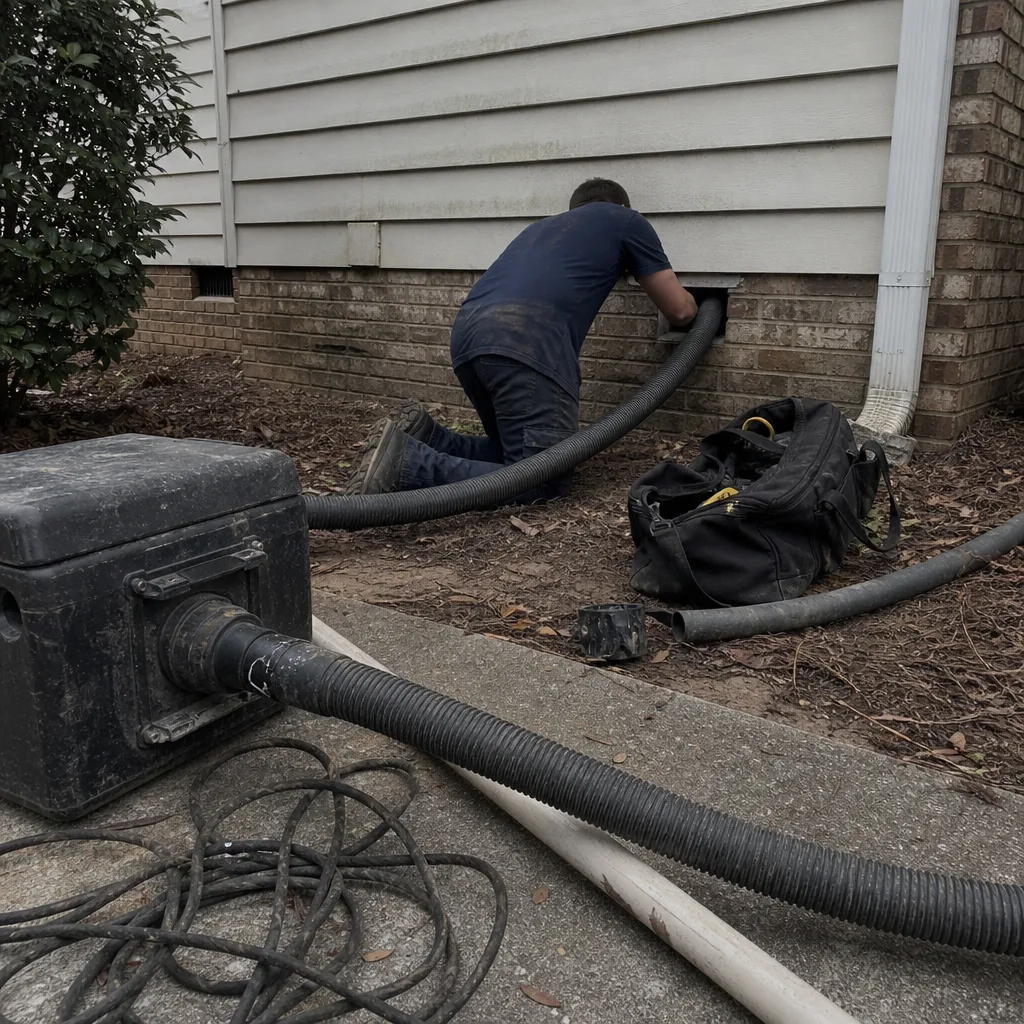 Before
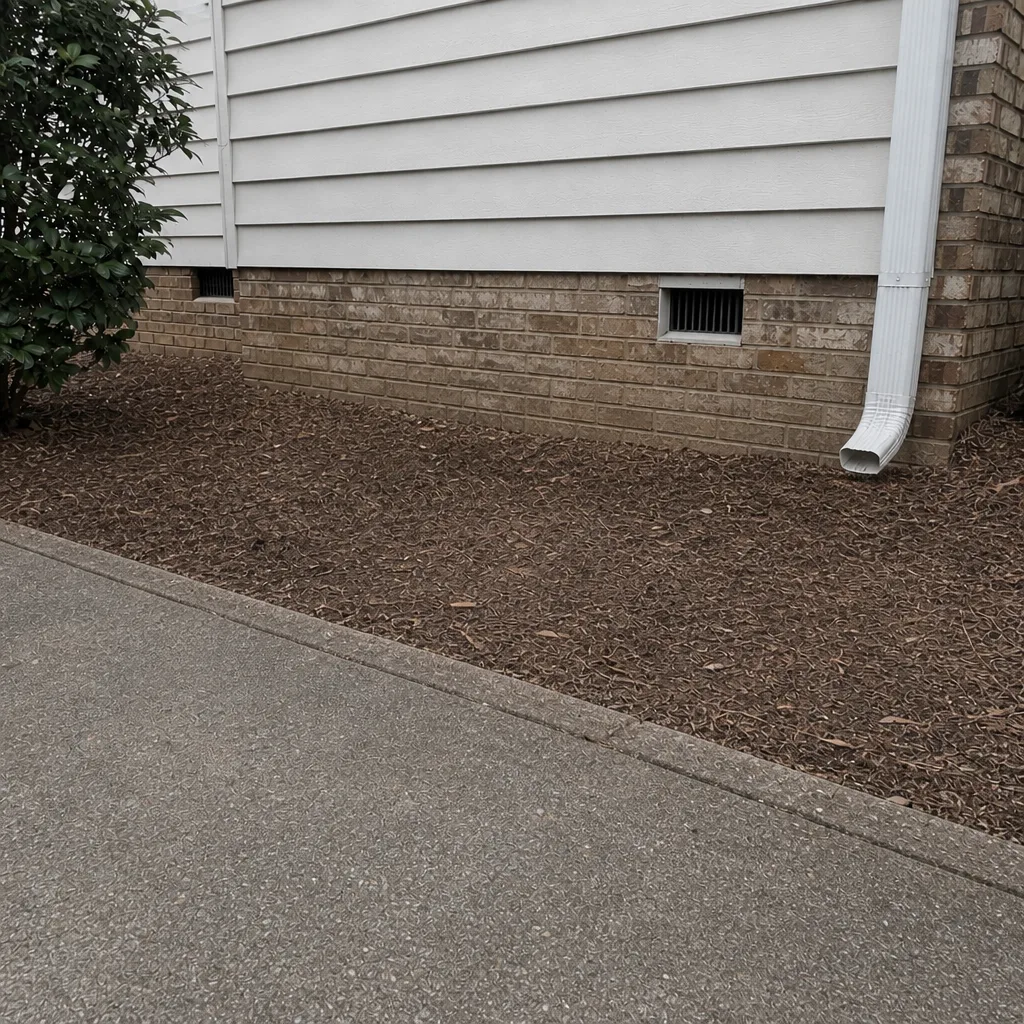 After
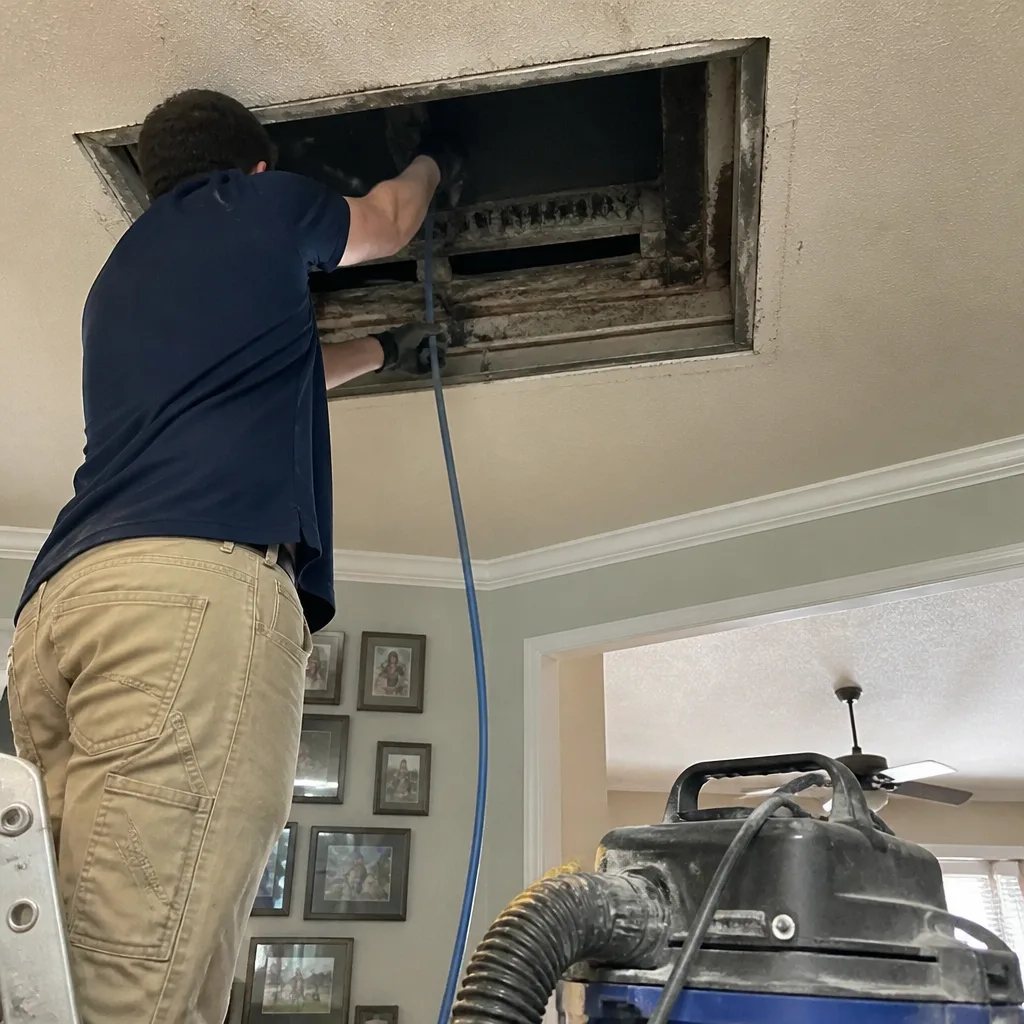 Before
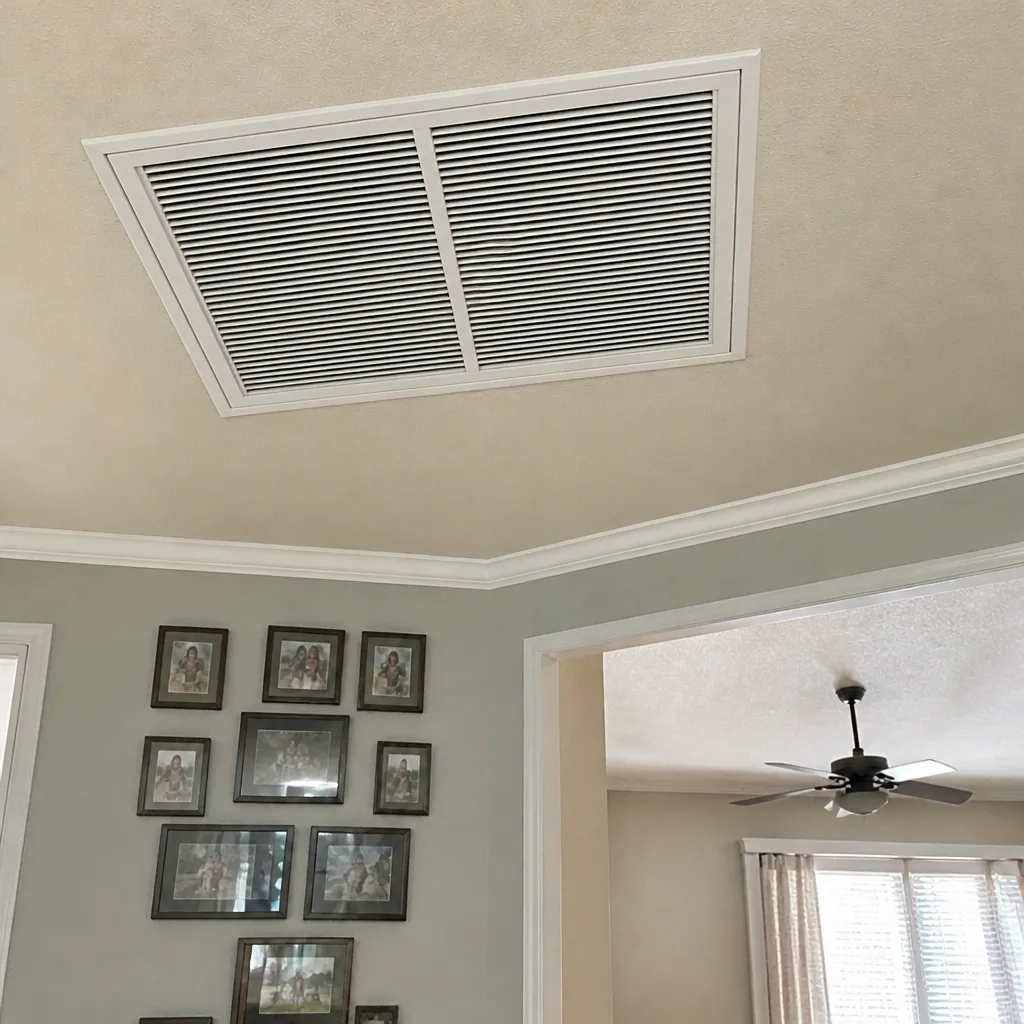 After
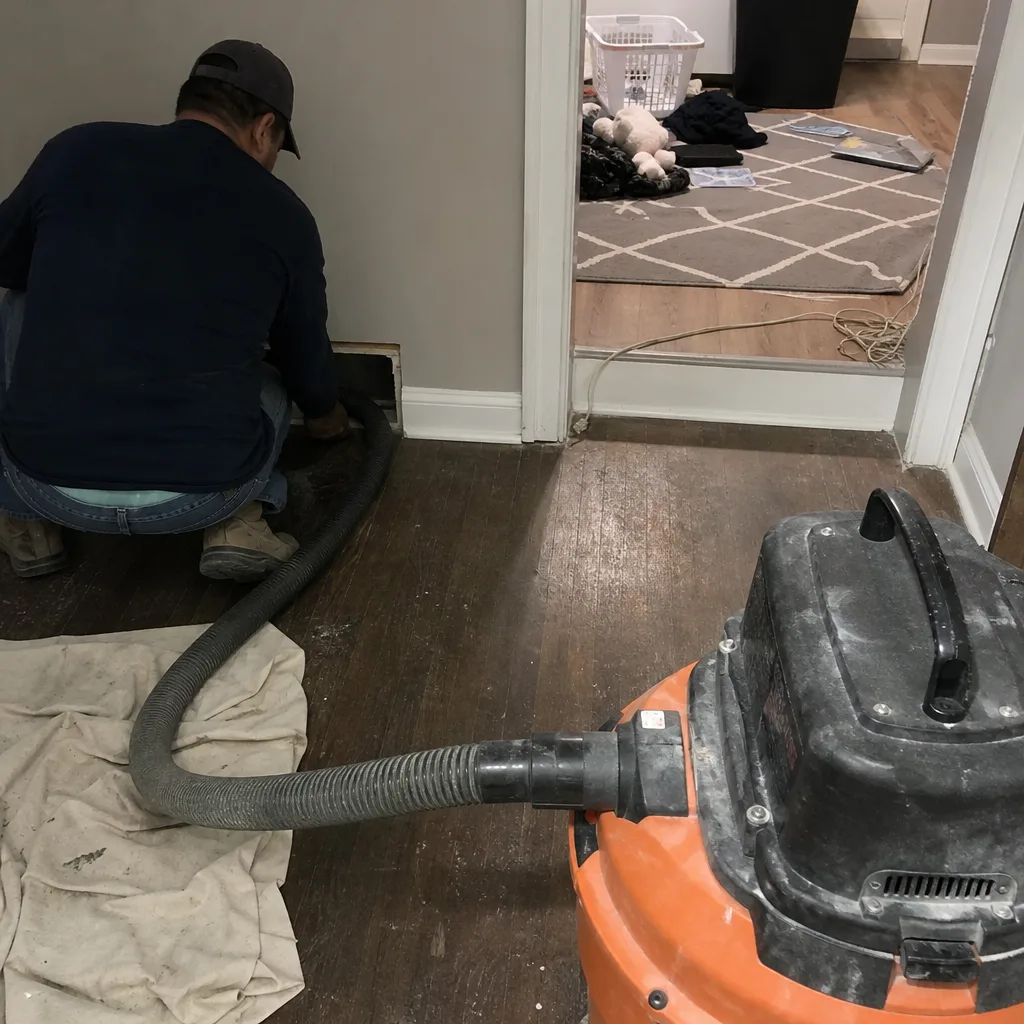 Before
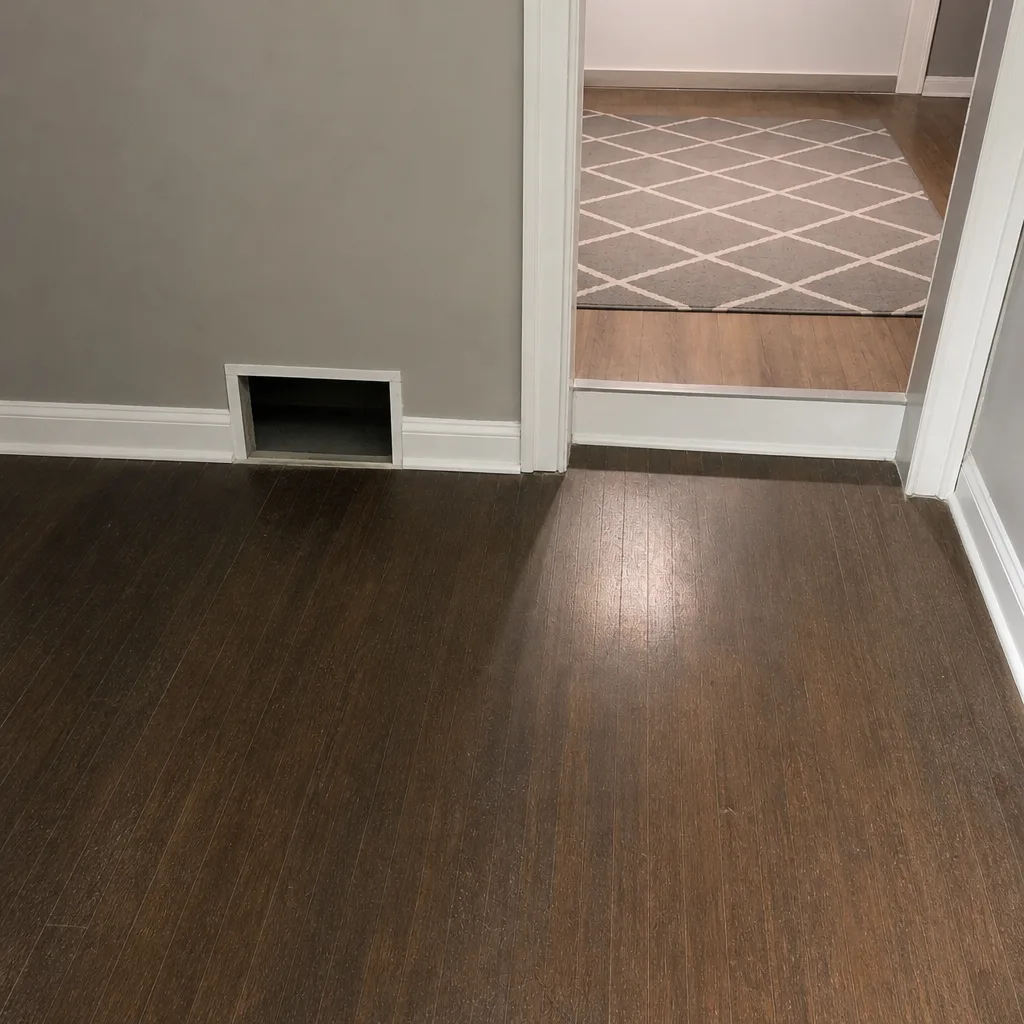 After
When to Call a Professional
Hire a professional when the signs point to a problem deeper than the register surface: dark dust streaks blowing from multiple registers, noticeably uneven airflow, visible staining or open seams at boot joints, musty smells that only appear when the system runs, evidence of pest activity in a return, or a crawlspace duct layout you can’t safely reach. Hire when you’ve got flex duct that’s sagging or kinked, because that’s duct repair alongside cleaning, and both deserve one visit. And hire when you want actual verification that the cleaning happened: before-and-after photos and documented airflow improvement. Hartwell Air Duct Cleaning offers free estimates in Columbia. Call (866) 942-9804. We answer 24/7. Fast dispatch from 7am to 7pm, Sunday through Friday.
Frequently Asked Questions
You can clean the registers and grilles with a shop vac, but you cannot meaningfully clean the duct runs. A shop vac produces around 100 CFM of airflow, while professional source-removal cleaning needs roughly 2,000 CFM of continuous negative pressure. The gap isn’t closable with effort or a bigger hose. For the visible surfaces, shop-vac and cloth are fine. For the interior of the ductwork, call a professional. Call (866) 942-9804 for an honest assessment. We answer 24/7.
There’s no fixed interval. It depends on the condition of your system, not the calendar. Two signs push a cleaning up the priority list: your supply registers show dark streaks blowing outward even after you clean them, or you notice uneven airflow across the house. If your furnace filter clogs noticeably faster than usual or the return grille dusts up in a few weeks, that points to debris upstream. If your dryer vent lint load is building fast, add that to the list. For Columbia homes with crawlspace ductwork, the signals to watch are moisture and staining rather than dirt amount. For an exact evaluation, call (866) 942-9804. Estimates are free.
It comes down to equipment physics. Professional cleaning pairs high-volume negative pressure with simultaneous contact agitation and HEPA filtration, so debris is loosened and captured in the same pass. DIY cleaning loosens debris without containing it, and some of that debris escapes into living spaces. In flex duct, brushing without sufficient suction can compact material into the corrugations, making the eventual professional visit take longer. That asymmetry is why a professional-grade Rotobrush or Nikro system does work a shop vac fundamentally can’t.
Crawlspace duct layouts, older flex duct runs, and hot humid summers all raise the professional case. Columbia-area crawlspace ductwork is harder to inspect and clean properly, frequently develops condensation on the exterior in summer, and is more exposed to soil and pest debris. Flex duct systems in the region are often original to the build and prone to sagging, kinking, and liner damage that require more careful contact tooling than DIY kits provide. Humid summers also make moisture-intrusion evidence more likely, and moisture in ducts needs professional evaluation, not a shop vac.
Ask for before-and-after photos of your own ducts. That’s the single most reliable check. You should see the interior of a duct before the technician starts and the same interior after cleaning finishes. Any honest company provides this without being asked. Ask also about airflow feedback: if the technician can’t tell you what changed, ask why. A shop-vac job leaves no trace, which is exactly why the companies selling one avoid documentation. Call (866) 942-9804 for a quote with photos included. We answer 24/7.
Yes, and it deserves its own visit. Dryer vent cleaning is a separate service because it addresses a separate system and a separate risk. Dryer vent lint is a leading cause of residential fires, and a clean dryer vent also improves dryer efficiency. Many homeowners can handle the accessible run behind the dryer and the exterior flapper. The interior run through walls, floors, and ceilings needs professional cleaning. We treat dryer vent cleaning as a standalone service, not an upsell. For a quote, call (866) 942-9804. Estimates are free.
The Bottom Line
The DIY vs. professional question for air duct cleaning in Columbia comes down to one thing: the CFM gap no consumer tool can close. You can honestly handle register and grille cleaning, filter changes, dryer vent lint removal, and spot-cleaning individual boots. Those are real value and worth doing yourself. Beyond that, the debris bonded to duct walls, the trunk lines, the crawlspace runs, and the flex duct that needs careful tooling all need professional equipment and containment. Call a professional when the signs point past the surface, and judge that professional on what equipment they run, whether they repair as well as clean, and whether they document the work with before-and-after photos of your own ducts. If you’re on the fence, a free estimate settles it. Call (866) 942-9804. We answer 24/7. Fast dispatch from 7am to 7pm, Sunday through Friday.
Written by the team at Hartwell Air Duct Cleaning.